Honeymoon in Mallorca: A Luxury Getaway for Newlyweds
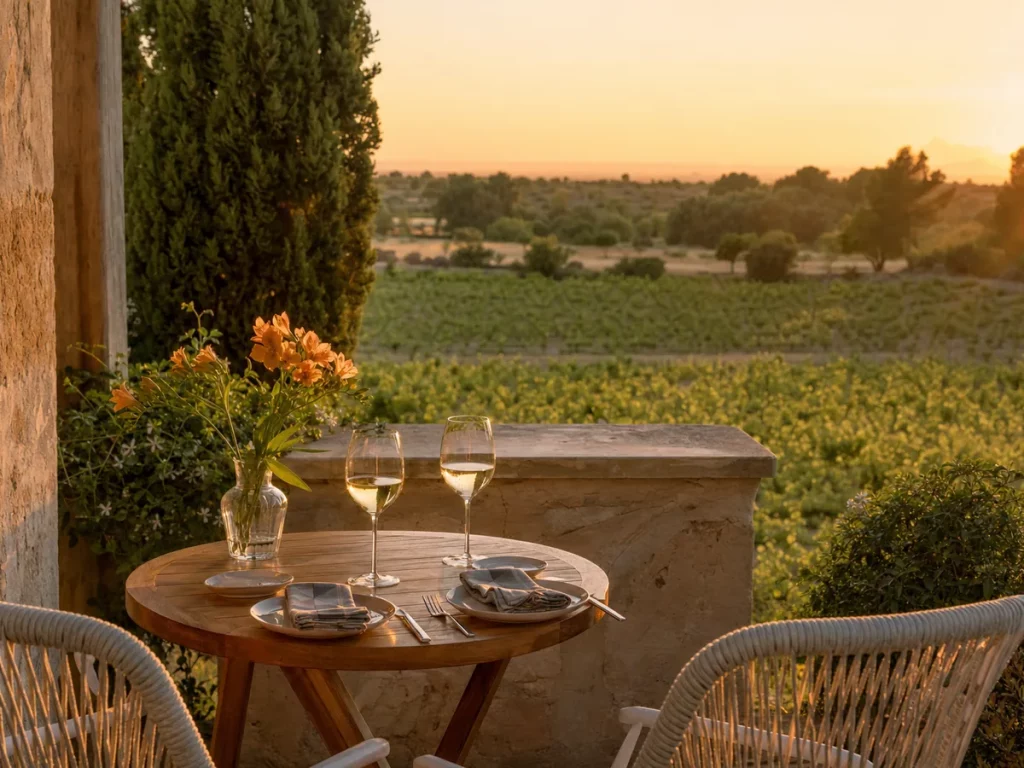
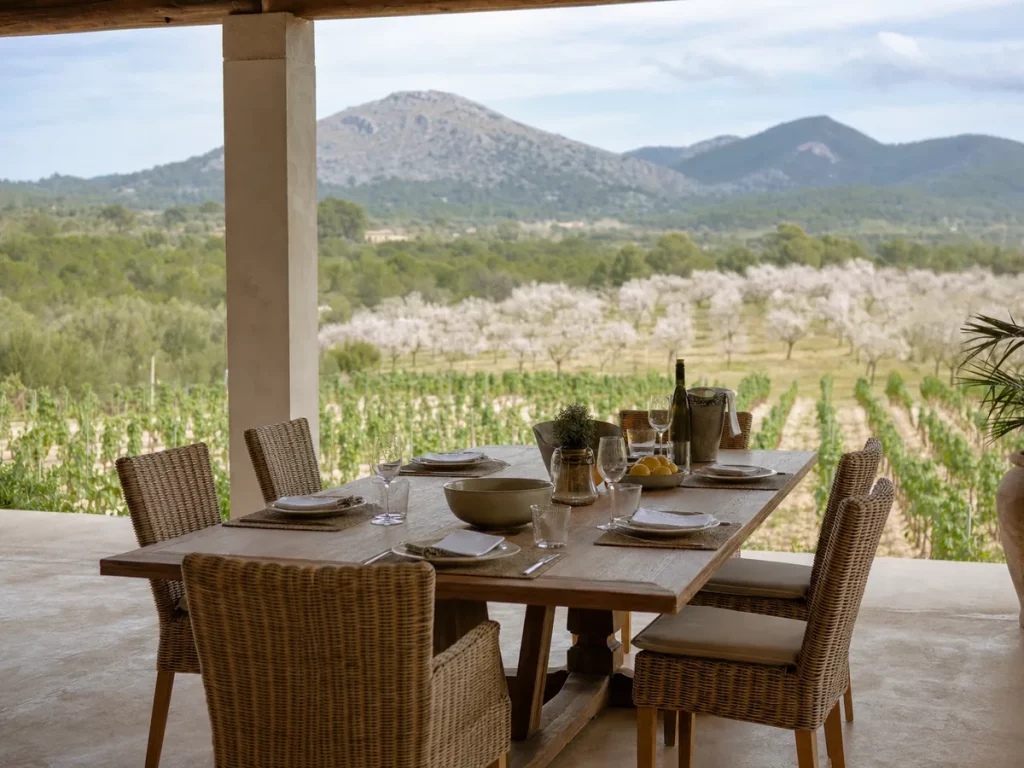
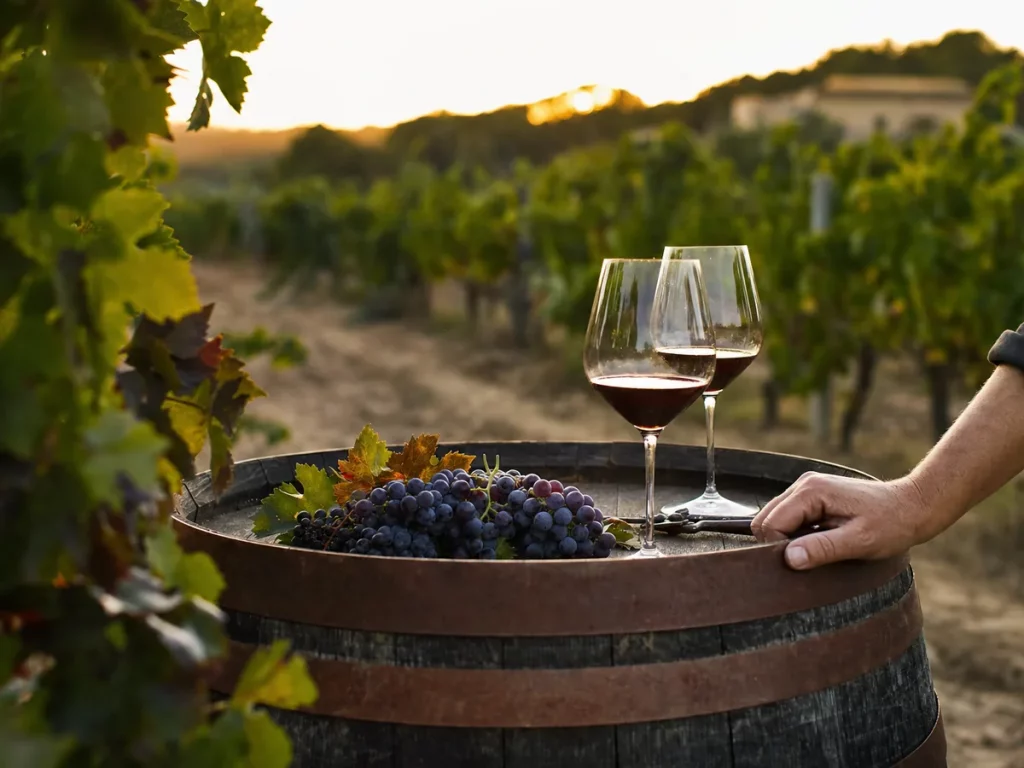
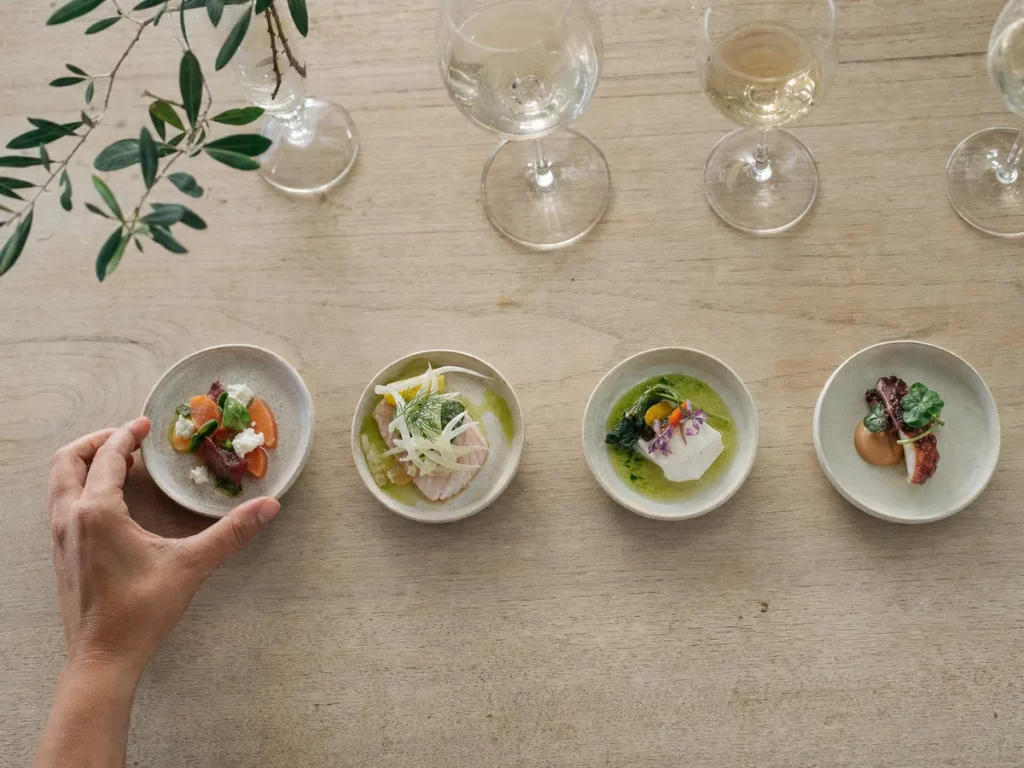
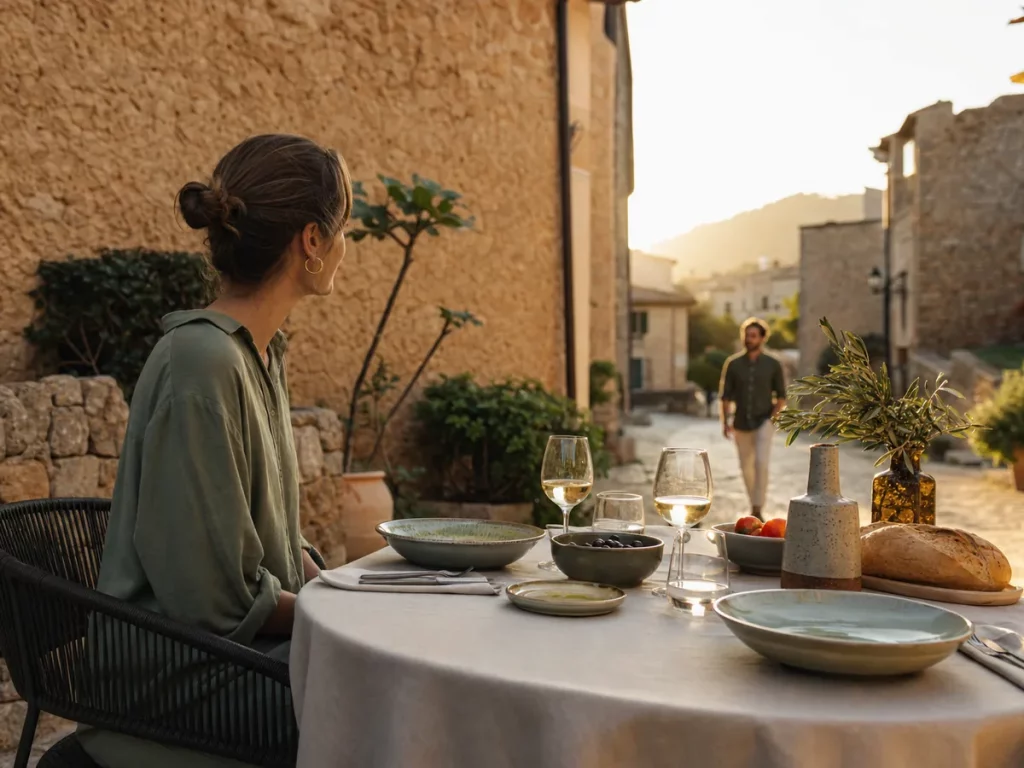
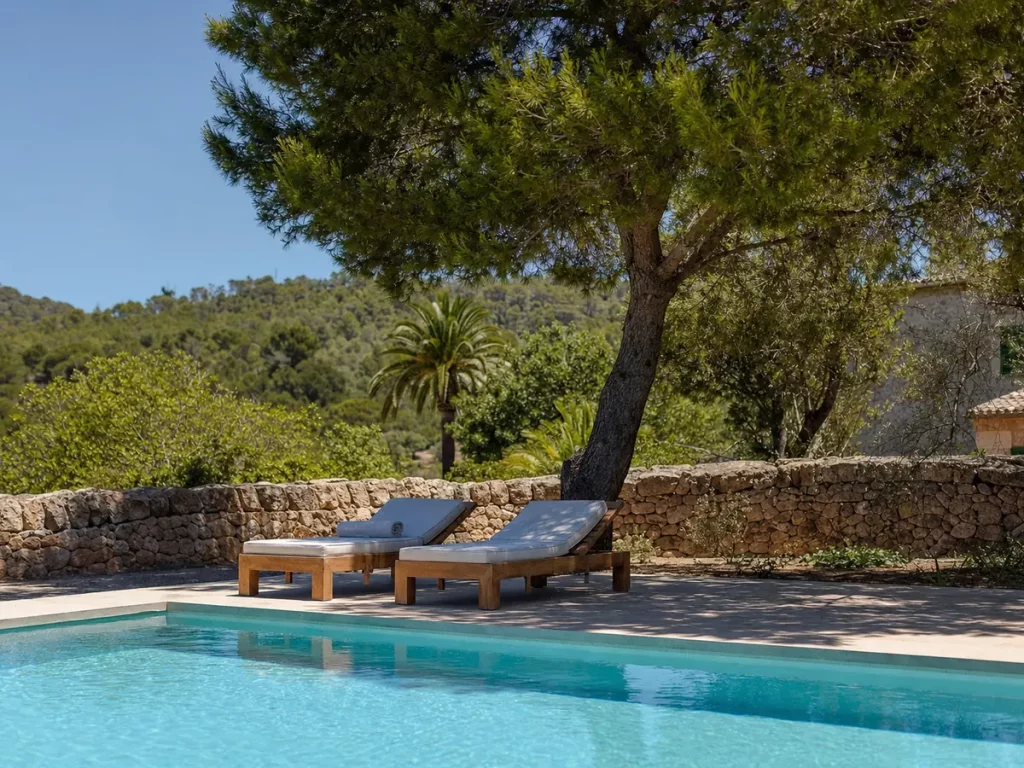
Es Mayolet is a slow luxury agritourism retreat in Manacor with just 10 rooms: a maximum of ten couples on 28 hectares of vineyard and orchard. For the 2026 honeymoon in Mallorca, when the average expenditure in Spain is around €5,437, here luxury is time, silence, and space. The season runs from April to October, with May, June, and September being ideal months. There's a trip unlike any other. It's not just another vacation or a weekend getaway: it's the first chapter of a life together. That's why a honeymoon in Mallorca demands something different from any ordinary hotel with a breakfast buffet and three hundred sun loungers. It demands intimacy. It demands a place that respects your silence. In the heart of Manacor, in the Llevant region, Es Mayolet opens a 28-hectare estate with its own vineyard, orchard, horses, and a Mallorcan house restored stone by stone. Just ten rooms. No resort, no queues, no crowds. Here, honeymoons are savored slowly, and that slowness is precisely what makes them luxurious. This is our slow luxury agritourism experience in Mallorca. Why choose an agritourism retreat for your honeymoon in Mallorca instead of just another hotel? Because a hotel treats you like two guests among hundreds, while an agritourism retreat treats you like the only ones. For your honeymoon in Mallorca, the estate replaces noise with the countryside, the elevator with a stroll through vineyards, and the room number with your name. It's the difference between simply staying and truly belonging. After months of wedding planning—invitations, guest lists, protocol—the last thing you want is more people and more noise. The numbers confirm it: according to the Bodas.net Wedding Sector Report, planning is the most exhausting part of the process for most couples. The honeymoon is the reward. And rewards aren't found in queues. Luxury agritourism offers something different: In a hotel, the landscape is outside. At Es Mayolet, you live within it. What makes Es Mayolet a unique honeymoon experience: 10 rooms and 28 hectares just for you? The proportions. Ten rooms spread across 28 hectares means that, at most, you'll share the entire estate with nine other couples. Almost always, the feeling is that you have the whole countryside to yourselves. This disproportion between space and guests is the heart of slow luxury. Think of it this way: a resort crams hundreds of people into a few buildings. We do the exact opposite. Each suite opens onto the vineyards or the orchard, offering the privacy of knowing that behind the wall there isn't a corridor full of suitcases, but centuries-old olive trees. The house, restored with respect for the stone and traditional Mallorcan architecture, doesn't imitate catalog luxury: it reinterprets it from an authentic perspective. You can explore each space in our exclusive suites and rooms. No two are alike, and none resemble the hotel room you already know by heart. Here, luxury isn't measured in stars or meters of marble: it's measured in how many hours you can spend without encountering another soul. What experiences for two does a honeymoon among vineyards offer: a private tasting and a tasting menu? A honeymoon among vineyards transforms the estate into a destination in itself. At Es Mayolet, the gastronomic experience is the focus: a private tasting of the house wine at sunset and a tasting menu designed for two, featuring produce harvested from the garden that very morning. From field to plate, no intermediaries. The wine isn't a decorative detail: it's an integral part of the place's essence. Discovering wine tourism in Mallorca while walking through your own vineyard, glass in hand, is one of those memories that can't be captured in a photograph. And the culminating moment arrives at the table: our tasting menu translates the Mallorcan garden into a sequence of dishes to be savored slowly, like everything here. It makes sense that it would be perfect for you. Among the preferred destinations for 2026, gastronomy (14%) and wellness (13%) are now as important as classic luxury, according to the Wedding Sector Report. This estate perfectly embodies the essence of honeymooning: fine dining, even better rest, and no rush. What activities await newlyweds on the estate: horseback riding and nature trails? Beyond the dining experience, the estate continues to offer reasons to leave the car at home. The highlight is horseback riding in Mallorca along the property's own trails and the surrounding Llevant region—an intimate and unique experience that few newlyweds can boast. Nearby: a swimming pool, walks among olive groves and vineyards, and the simple pleasure of doing absolutely nothing. Nature here isn't just a backdrop; it's the entire experience. Waking up to the tranquility of the estate. A swim before the sun's intense heat. The shade of a fig tree in the late afternoon. And if you fancy venturing out, the coves of Mallorca's Llevant coast are just a stone's throw away, far from the crowds of the more touristy shore. It's this combination—horseback riding, orchards, vineyards, water, and tranquility—that allows a honeymoon in Mallorca to be experienced entirely within a single estate, without repeating plans two days in a row. What's the best time for a honeymoon in Mallorca, month by month? The season runs from April to October, with May, June, and September being the peak months: pleasant temperatures, long days, and fewer crowds than in the height of August. July and August offer the peak of summer, with warm nights; April and October offer a peaceful island and more affordable prices, ideal if you're seeking seclusion. Month Atmosphere For whom April Island awakening, green countryside Couples seeking calm and affordability May Ideal weather, vineyards in bloom The best overall combination June Long days, warm sea Sun without the peak season crowds July–August
Best Time to Visit Mallorca: Seasonal Guide
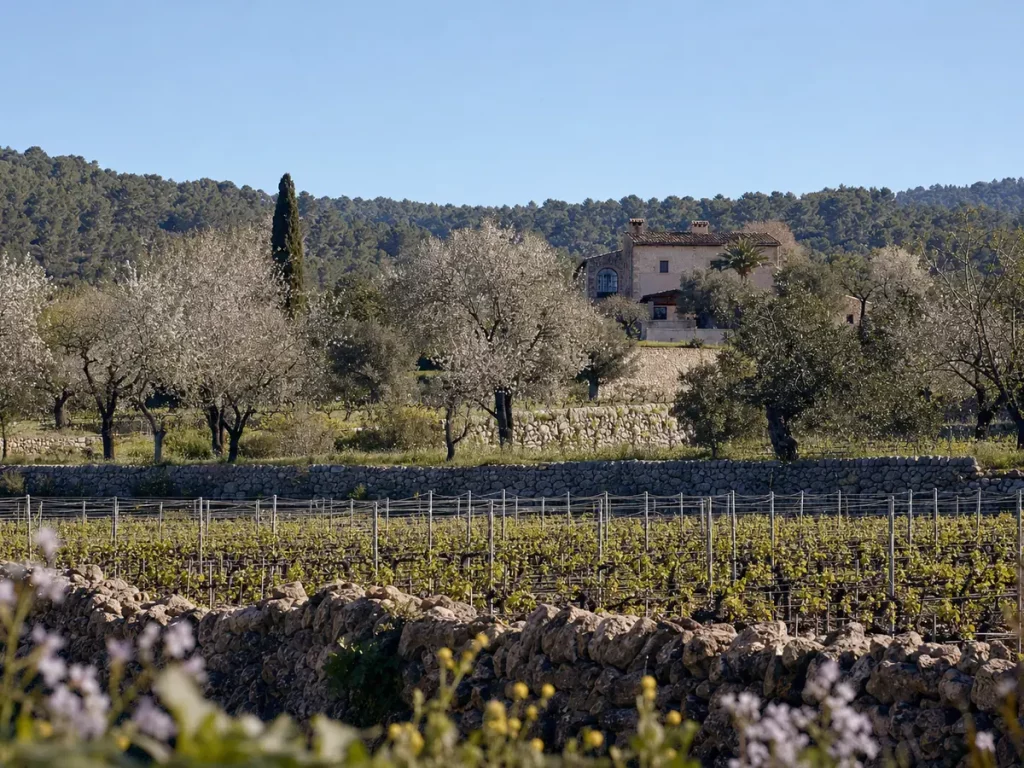
Mallorca broke records in 2015 with 19.05 million tourists, and the peak season (July 15–August 31) is characterized by heat, high prices, and crowds. But that's not the best time to visit Mallorca. May, June, September, and October offer pleasant weather, warm seas, and much more tranquility. And inland, spring and autumn are the true gems: green fields, the grape harvest, and peace and quiet away from the coast. Choosing the best time to visit Mallorca depends less on the calendar and more on what you're looking for. The island is not a single entity. The coast experiences its peak season in August, while the interior hides its best side during the shoulder months, those that almost no one visits. Here in Manacor, in the heart of Llevant, the landscape transforms with each season. The almond trees blossom in February. The vegetable gardens burst into color in spring. The vineyards are harvested at the end of summer, and the October light gilds everything. This guide explores Mallorca month by month, with real data on weather and visitor numbers, so you can choose the perfect dates. And here's a simple idea: if you're looking for silence, green countryside, and space, the answer is almost never July. What's the best time to visit Mallorca depending on what you're looking for? There's no single answer, and that's the secret. If you're going for the beach and a lively atmosphere, aim for June to September. If you're looking for nature, hiking, and tranquility, stick with spring and autumn. And if your priority is escaping the crowds, steer clear of July 15th to August 31st. The coast and the interior offer different experiences. In summer, the former teems with people, while the latter becomes a haven. A swim in August is wonderful at nine in the morning and overwhelming at midday. On the other hand, a walk among almond trees in March, with the countryside still fresh, is unbeatable. Think of it this way: those who come to Mallorca just for the sand have a window of opportunity. Those who come for the whole island have almost the entire year. That's why a getaway to an agriturismo in the interior of Mallorca works well during times when the beach is out of the question. The best time to visit Mallorca is ultimately the one that fits your plans, not the postcard image. What's the weather like in Mallorca month by month? Mallorca's climate is textbook Mediterranean: hot, dry summers, mild winters, and rainfall concentrated in autumn and winter. Palma's average annual rainfall is around 449 mm according to Palma's climate data (AEMET), far from the stereotype of a perpetually rainy island. Here's a quick overview. Month Max-Min Temp. (ºC) Temp. Sea temperature (ºC) Ambiance January 15 / 5 14 Quiet island, low light, cold sea February 15 / 5 14 Almond tree in bloom, countryside awakening March 17 / 7 15 Early spring, intense green April 19 / 9 16 Pleasant days, orchard in progress May 23 / 12 18 Ideal weather, still few people June 27 / 16 21 Comfortable beach, atmosphere on the rise July 30 / 19 25 Dry heat, island at its peak August 30 / 19 26 The hottest and most crowded month September 27 / 17 25 Warm sea, grape harvest, it empties out October 23 / 14 22 Golden light, mild autumn November 19 / 9 19 Rainiest month, total calm December 16 / 7 16 Mild winter, intimate island Look at the sea column. The water takes time to warm up and also to cool down, which is why October is better for swimming than June. And look at the highs: the difference between May and August is seven degrees, which is very noticeable at street level and under the sun. What does Mallorca offer in spring (March-May): almond blossoms, orchards in bloom, and green countryside? For many, spring is the best time to visit Mallorca without going to the beach. March and April bring days of 17 to 19 degrees Celsius, green fields, and clear light. May reaches 23 degrees, with the sea already at 18. Fewer people, reasonable prices, and nature at its most generous. Inland, this season is a quiet spectacle. The almond trees finish flowering at the beginning of the year, but the orchards take over: broad beans, peas, the first seasonal vegetables. The countryside smells of damp earth and orange blossom when it's in season. It's the time for hiking without breaking a sweat, for routes through the Llevant region, for eating lunch outdoors without a coat or umbrella. A weekend in May among vineyards and silence is nothing like the same place in August. Spring offers space, and space, here, is a luxury. What to expect from Mallorca in summer (June-August): beach, heat, and the interior as a refuge? Summer is the Mallorca of postcards and also the most uncomfortable. July and August see highs approaching 30 degrees Celsius, with a delightful sea at 25-26. It's peak season: in July 2025 alone, the island surpassed two million tourists, with the coves packed from early morning. June is the most pleasant of the three months. The mid-July crowds haven't yet arrived, and the water is already inviting. If your only plan is the beach, this is your month. July and August require strategy. The coast is best enjoyed at dawn or dusk, never at midday. And that's where the interior changes the rules: under a carob tree, with the pool nearby and no noise, the heat is endured in a different way. Many who discover the coves of Llevant in the morning end up sleeping far from the hustle and bustle, in the countryside, precisely to escape it. Why is autumn (September-October) ideal in Mallorca: grape harvest, warm sea, and golden light? Autumn is probably the best time to visit Mallorca if you want it all. September maintains a high of 27 degrees Celsius and a warm sea of 25. October drops to 23, with the water still at 22.,
Typical Mallorcan Dishes You Must Try

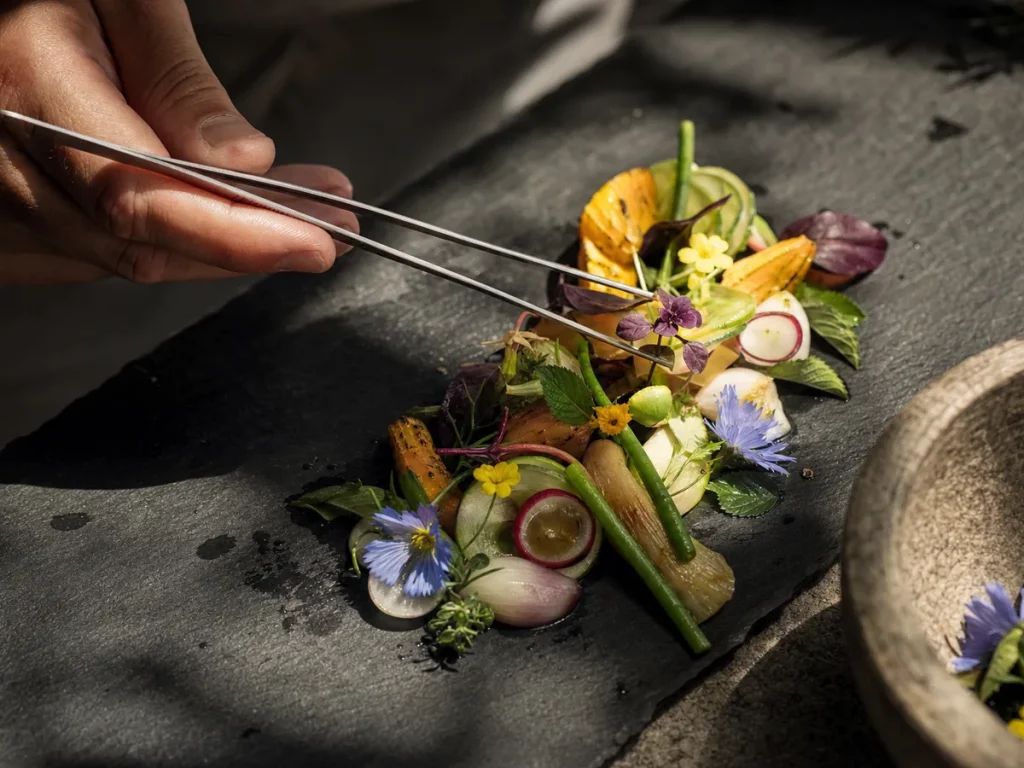
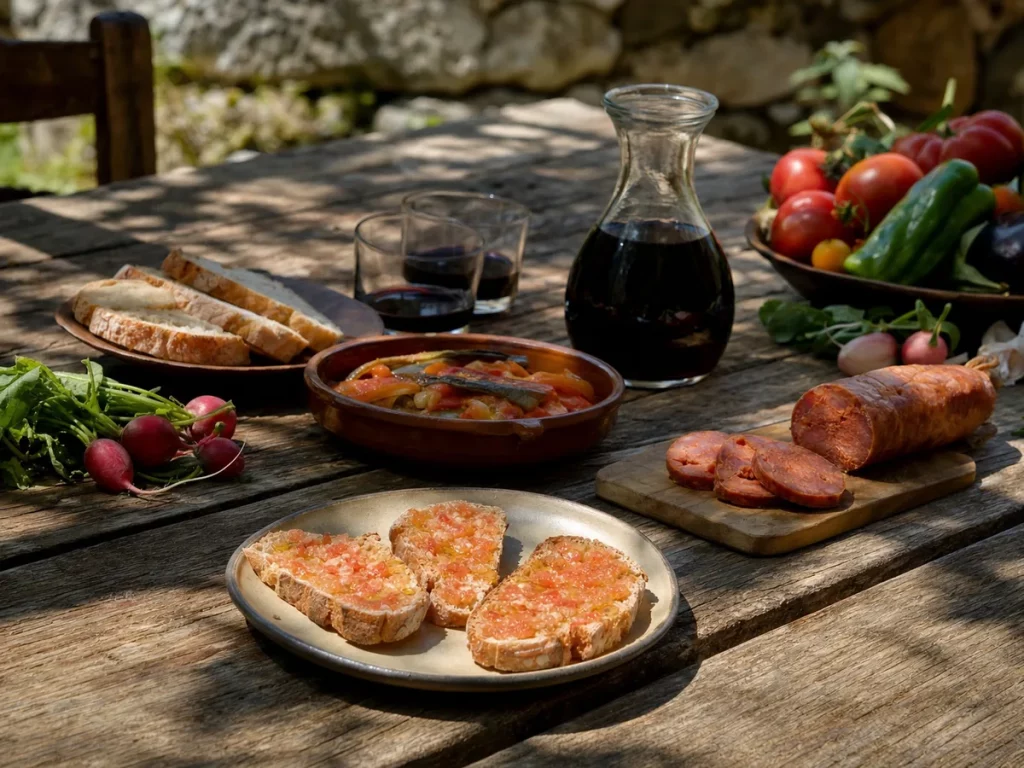
Mallorca's traditional dishes revolve around the garden, pork, and olive oil. In 2026, the island will protect its culinary treasures: Sobrasada de Mallorca PGI surpassed 5.6 million pieces in 2025, Oli de Mallorca PDO encompasses more than 4,300 hectares of olive groves, and 13 wineries operate within the Pla i Llevant DO, the Manacor region. At Es Mayolet, we bring the ingredients from our own organic garden to your table. Some cuisines are better understood through hands-on experience than theory. Mallorcan cuisine is one of them. Traditional Mallorcan dishes didn't originate in an elegant cookbook, but rather in the kitchens of the peasantry: using the whole pig, preserving garden vegetables, stretching day-old bread. From this rural logic emerged an honest, flavorful, and surprisingly modern Mallorcan cuisine. Here in Manacor, in the heart of Llevant, we continue to cook with that same philosophy. Olive oil reigns supreme, vine tomatoes hang until winter, and sobrasada cures in its prime. This is a journey through the dishes that define Mallorcan cuisine: what they are, where they come from, and why they're worth trying with local produce, not imitations. What typical Mallorcan dishes are absolute must-tries? If you only have one visit to the island, these are the essentials. They are dishes that tell the story of the land: gardens, pork, almonds, and ovens. Some are eaten daily in every home; others only appear at festivals or slaughtering events. All of them form the emotional map of Mallorcan cuisine. What makes Mallorcan cuisine unique compared to the rest of Spain? The difference is geographical rather than technical. Mallorca is an island, and an island cooks with what's available and preserves what's left over. That's why typical Mallorcan food revolves around preserves, bread, and pork, much more than imported recipes. Paprika, for example, doesn't color cooked chorizo here, but rather raw sobrasada that matures on its own. Bread isn't thrown away: it's sliced very thinly and used to hold the sopes. And the sweetness doesn't depend on refined sugar, but on almonds, which have carpeted the fields of the Pla for centuries. Add to that the Arab heritage in pastry making and the importance of olive oil, and you understand why typical Mallorcan dishes taste different from those on the mainland. It's not folklore: it's the island's larder transformed into its identity. From garden to table: what local product underpins Mallorcan cuisine? All Mallorcan cuisine rests on four pillars of the countryside: seasonal vegetables, olive oil, pork, and wine. Without a garden, there's no tumbet or trempó. Without olive groves, there's no pa amb oli. It's a gastronomy that begins in the land and ends, almost without intermediaries, on the plate. The Oli de Mallorca PDO (Protected Designation of Origin) encompasses some 1,122 registered producers and more than 4,300 hectares of olive groves, and it's the thread that weaves together almost all of these dishes. The hanging bunch tomato, which keeps for months, allows you to enjoy trempó out of season. This logic of proximity is what underpins the farm-to-table cuisine we practice in Mallorca, and it's gaining ground in the island's haute cuisine: locally sourced produce, short season, and minimal processing. The less the ingredient travels, the more its flavor speaks for itself. What are the classic Mallorcan rice and soup dishes: sopes, arròs brut, and frit? Winter in Mallorca is all about eating with a spoon. Mallorcan sopes, despite their name, don't have loose broth: they're a dry stew of cabbage, cauliflower, and other vegetables served on very thin slices of brown bread, which soak up all the flavor. It's comforting and leaves no one hungry. Arròs brut is the other great stew: a soupy, dark rice dish, spiced with pepper, cloves, and sometimes cinnamon, loaded with meat, small game, sobrasada (a type of cured sausage), and vegetables. The Mallorcan frit completes the trio, though it shifts gears: a robust stir-fry of liver, blood sausage, or fish with potato, pepper, and fresh fennel, closely linked to the pig slaughter and springtime. These are three hearty dishes, slow-cooked to perfection, that explain why Mallorcan cuisine is so deeply rooted in the traditional farmhouse. None of this is improvised. Which garden vegetables take center stage in Mallorcan cuisine: tumbet, trempó, and coca de trampó? Here, vegetables aren't a side dish: they're the star. Tumbet piles up potatoes, eggplant, and peppers, fried separately, layer upon layer, and binds them together with a reduced tomato sauce. Served on its own, it's a complete meal; with an egg or fish on top, it's a summer feast. Trempó is its raw and fresh version: ripe tomato, green pepper, and onion, hand-cut and dressed with oil and salt, nothing more. And when that same trempó is spread over a thin dough and baked, it becomes coca de trampó, a flatbread without cheese or fried tomato, eaten standing up at any village festival in the Llevant region. Three recipes, one single origin: the seasonal garden. That's why, in summer, they change depending on what the land yields that day. It's the most vibrant aspect of Mallorca's traditional dishes. What cured meats and products with Protected Designation of Origin (PDO) does Mallorca have? Mallorca protects its larder with official seals, guaranteeing their origin. Sobrasada de Mallorca PGI is the queen: a raw, cured pork and paprika sausage that can be spread, cooked, or eaten with a spoon. In 2025, it sold more than 5.6 million pieces, and smaller sizes now account for the bulk of sales. Alongside it, Oli de Mallorca PDO provides the base fat for almost everything, thanks to more than 4,300 hectares of olive groves. And then there's the wine: the Pla i Llevant DO, the designation of the Manacor region where we are, encompasses 444 hectares, 13 wineries and 67 winegrowers, with reds, whites and rosés of great character,
Caves of Drach and Porto Cristo: What to See near Manacor

The Caves of Drach are in Manacor, just a few minutes from Es Mayolet. Adult admission costs €18.50 online (as of 2026), and the visit lasts about an hour, covering 1,200 meters and including a live classical music concert on Lake Martel (117 meters long). From our property, you can arrive before the first tour of the morning. There are few places in Mallorca where the silence is as profound as underground. The Caves of Drach offer just that: an hour in twilight, still water, and music that arrives on the air before the boat even reaches you. And the best part for those staying with us is that they're right next door. Porto Cristo and the caves are within the municipality of Manacor, a short drive from the agriturismo in Manacor where you wake up surrounded by vineyards. This guide tells you what to really see: the admission price (as of 2026), seasonal opening hours, how to get there without getting up too early, and what to do in Porto Cristo when you emerge into the light. Also, what other caves and coves in the Llevant region are worth a morning's visit? Take your time; time seems to stretch here. What can you see in the Caves of Drach: Lake Martel and the classical music concert? In the Caves of Drach, you'll see four underground lakes and, above all, Lake Martel: 117 meters long by 30 meters wide, between 4 and 12 meters deep, one of the largest underground lakes in the world. The tour descends to 25 meters and ends with a live classical music concert on the water. The lake is named after Édouard-Alfred Martel, the French speleologist who mapped it at the end of the 19th century. Since 1935, a quartet—cello, harpsichord, and two violins—hauls a boat across the illuminated lake and performs about ten minutes of music in the darkness. It's brief and unforgettable. When the music ends, you can cross the lake by boat or on foot via the bridge, at no extra cost. The temperature inside stays between 17 and 21°C year-round, so a light jacket is a good idea even in August. If you'd like to see it in detail before you go, the cave's official website explains the route and the lake well. How much does admission to the Caves of Drach cost in 2026, and how long does the visit last? Admission to the Caves of Drach in 2026 costs €18.50 per adult (13 years and older) when purchased online, or €19.50 at the ticket office. Children aged 3 to 12 pay €11.50 online and €12.50 at the ticket office, and children under 3 enter free. The visit lasts approximately one hour. Online Tickets Ticket Office Adult (13+) €18.50 €19.50 Child (3-12) €11.50 €12.50 Infant (0-2) Free Free Please note that strollers are not allowed inside the cave due to the steps and narrow passage. The complete tour is approximately 1,200 meters long and reaches a depth of 25 meters, with the constant temperature mentioned earlier. Buying online is cheaper and, in summer, saves you from queuing at the ticket office during peak hours. Up-to-date prices and conditions are always available on the official pricing page. What are the opening hours of the Caves of Drach by season? The Caves of Drach are open almost all year round and are only closed on December 25th and January 1st. In high season, from March 16th to October 31st, there are seven tours daily; in winter, from November 1st to March 15th, this is reduced to four. In July and August, an extra tour is usually added at 6:00 PM. Season Daily Tours March 16 – October 31 10:00, 11:00, 12:00, 2:00, 3:00, 4:00, and 5:00 PM (Jul-Aug, +6:00 PM) Nov 1 – March 15 10:30, 12:00, 2:00, and 3:30 PM If you're staying at Es Mayolet, the 10:00 AM tour is the best: you enter the cave almost empty, without buses or large groups, and leave mid-morning with the rest of the day ahead of you. Since the agritourism season runs from April to October, you'll always be within the extended hours. To choose the best time to visit Mallorca without feeling overwhelmed, May, June, and September are ideal. How to get to the Caves of Drach and Porto Cristo from Manacor? From Manacor, the Caves of Drach are about 12 kilometers away along the Ma-4020 road towards Porto Cristo, a little over a 15-minute drive. From Es Mayolet, in the heart of the Manacor countryside, the journey is just as short and almost entirely on a quiet road. There is ample parking next to the entrance. Driving is the convenient option, but not the only one. There is a bus line that connects Manacor with Porto Cristo, and in summer the town fills up with people who arrive by bike along the Llevant trails. The cave is signposted from the entrance to the town, so you can't miss it. Our advice is simple: book the first tour of the morning, park at your leisure, and leave the afternoon free for the sea. If you want to plan the rest of your activities, this guide to what to do in Manacor gives you a complete map of the municipality. What to see in Porto Cristo beyond the caves: the beach, the Mermaid Promenade, and the port? Porto Cristo is much more than just the gateway to the caves. It has a sheltered urban beach at the end of a cove, a fishing and leisure port where boats moor, and the Paseo de la Sirena, the pedestrian promenade that runs along the water's edge, lined with restaurants and terraces. You can walk the entire length in an afternoon. After the cave's dimness, emerging onto the port is a beautiful contrast. You can eat fresh fish in front of the boats, swim at the beach—with its fine sand and calm waters, ideal if you're traveling with children—or relax on the promenade.
A getaway to disconnect in Mallorca: Silence and Slow Travel

A getaway to disconnect in Mallorca isn't about the crowded coast, but rather inland. In 2025, the islands received over 19 million tourists, 85-901 million of them concentrated in just seven months; that's why in 2026 the Consell (Island Council) is investing more than 8 million euros in inland tourism. In Es Mayolet, Manacor, there are 28 hectares of vineyards, silence, and dark skies. Luxury here is time. There's a moment, almost always mid-afternoon, when you realize you haven't checked your phone for hours and nothing has happened. That instant is the true purpose of a getaway to disconnect in Mallorca. It's not about changing locations to continue doing the same thing, but about slowing down until you can hear the wind rustling through the vines. In Manacor, in the heart of the Llevant region, the island's interior holds a tranquility that the coast lost long ago. And here, silence isn't the absence of noise: it's the presence of something else. The song of a bird. The crunch of gravel underfoot. Your own breath. This guide is for those seeking places to truly disconnect, practice slow travel, and enjoy an honest digital detox. Let's start with the essentials. What exactly is a getaway to disconnect in Mallorca (and what isn't)? A getaway to disconnect in Mallorca is about reserving time, not activities. It's about choosing a place where the plan is to have no plan: reading, wandering aimlessly, eating slowly. It's not a huge hotel with a packed pool, nor a schedule of excursions that leaves you more exhausted than the office. Disconnecting is about removing layers, not adding them. It's also worth clarifying what it isn't. It's not escaping work to answer emails from a hammock with a view. Nor is it about collecting photos that prove how well you're resting. That kind of superficial disconnection only transfers stress to another setting. The difference lies in the environment. A noisy place forces you to fill the gaps; a quiet one invites you to inhabit them. That's why the interior works where the coast fails: it doesn't compete for your attention, it liberates it. Why is the interior of Mallorca more relaxing than the coast during peak season? Because the interior doesn't get overcrowded. According to IBESTAT tourism data, the Balearic Islands surpassed 19 million visitors in 2025 (a record, +1,731 million), with between 85 and 901 million arriving in just seven months, from April to October. That influx stays on the coast. Inland, the calm remains undisturbed. While the coves fill with umbrellas and long queues, the Llevant region breathes a different rhythm. The authorities have understood this: the Consell de Mallorca is promoting inland tourism with more than 8 million euros in 2026, consolidating the Pla and the interior as a destination for tranquility, not overcrowding. And here, investing in sustainable tourism in Mallorca makes perfect sense: fewer cars, less noise, locally sourced products. Calm and respect for the land go hand in hand. How can you truly disconnect from the digital world on your getaway? A true digital detox isn't about turning off your phone for a while and bragging about it. It's about redesigning your day so that the screen is no longer the center of attention. This matters because the strain is measurable: according to the 2026 Digital Wellbeing Report, nearly 391% of adults aged 25 to 34 acknowledge that social media negatively impacts their well-being. These steps help reverse this trend: You don't have to do them all on the first day. With just three, you'll already notice the difference. What can you do to disconnect without leaving the estate: silence, vineyard, and garden to your table? The best part of a digital detox is that almost everything happens right on the estate. In 28 hectares, there's plenty of space to get lost without going anywhere. Silence isn't something you seek: it finds you. Experience what the estate offers, without even needing a car: The vineyard marks the seasons, and the garden dictates the menu. This connection with the land is what transforms rest into something genuine, not just a simple pause. Here, time isn't killed: it's savored. When is the best time for a relaxing getaway in Mallorca? The season runs from April to October, and the beginning and end are the best. April, May, and June bring green countryside, pleasant temperatures, and very few people. September and October offer warm light, the grape harvest, and perfect nights. July and August also work well inland, where the heat is less intense than on the coast. If absolute silence is your priority, avoid the heart of August. Not because the estate gets crowded—it doesn't—but because the whole island has a different vibe. Spring and early autumn are the ideal window for uninterrupted relaxation. Each month has its own character, and I describe them in detail in the guide on the best time to visit Mallorca. Whenever you choose, the interior will always be a step behind the hustle and bustle. Where to stay to truly disconnect in the interior of Manacor (Llevant)? To truly disconnect, you need to sleep where silence is guaranteed, not just promised. That means few rooms, spacious surroundings, and a philosophy that respects your time. At Es Mayolet, there are only 10 rooms spread across 28 hectares: you'll never encounter crowds. We are an agritourism retreat in the heart of Mallorca, conceived from the perspective of "slow luxury"—the idea that true luxury isn't marble, but rather the ability to do absolutely nothing without feeling like you're missing out. Here, your phone switches off on its own, almost as if influenced by the surroundings. A getaway to disconnect in Mallorca finds its most authentic expression in this corner of the Llevant region. You can explore the grounds, the vineyard, and the restaurant on our luxury agritourism website in Mallorca. And if you're traveling as a couple, we tell that story in our guide to a romantic getaway in Mallorca; this one is about reconnecting with yourself. Nights under dark skies: what's it like to disconnect under the stars at Es Mayolet?
Horseback Riding Routes in Mallorca: Riding through the Countryside and Vineyards

Horseback riding in Mallorca swaps the beach for the interior: countryside, tranquility, and vineyards. At Es Mayolet, in Manacor (Llevant), you can ride for three hours and enjoy a picnic and ride among the vines. In 2026, prices range from €30 (short ride) to €130-€190 with a tasting. Best time: April to October. No prior experience necessary: introductory training is available, and children from 7 years old are welcome. There's an image everyone associates with horseback riding in Mallorca: the trot along the shore, the waves, the photo. That's nice. But it's not the only thing, nor by any means the most interesting. The horseback riding routes in Mallorca that truly stay with you are those that take place inland, among holm oaks, red dirt paths, and vineyards that smell of summer. Here, inland from Manacor, in the Llevant region, we have a 28-hectare estate with its own vineyard. And a simple idea: luxury isn't noise, it's time. Riding slowly, listening only to the hooves and the wind, and ending with a meal set among the vines. That's what this is all about. Returning to a slower pace at an agriturismo with a vineyard in Manacor. What is a horseback riding tour through the Mallorcan countryside, and how is it different from riding on the beach? A horseback riding tour through the countryside is a guided ride along rural paths, shaded by trees, and varied terrain, designed to let you enjoy the inland landscape. The difference from the beach is significant: fewer people, more silence, more real nature. The horse is calm, and so are you. On the coast, the ride is usually short, very exposed to the sun, and, in high season, shared with many other people. Inland, the experience changes completely. The paths of the Llevant region wind between dry stone walls, vineyards, and almond groves. There is shade. There are aromas. There is that rare silence that you never find on the coast. That's why many of the best horseback riding excursions on the island no longer face the sea, but rather the interior. Where to go horseback riding in the Llevant region of Mallorca, inland from Manacor? The Llevant is the eastern half of the island and boasts some of the best riding trails in all of Mallorca. Manacor is at its heart. From here begins the network of ancient rural paths that for centuries connected the villages of the region, now perfect for horseback riding. This area holds a gem for hikers and riders alike: the GR-226, the Llevant Route, 104.82 km linking Manacor with Sant Llorenç, Son Servera, Artà, and Capdepera, skirting the Llevant Peninsula Natural Park. You don't have to ride the whole thing, of course. Our estate overlooks these same paths, and the trails start directly from the stables, with no transfers or paved roads. You leave the stables and you're already out in the countryside. If you're looking for things to do in Manacor beyond the main attractions and the town center, this is another side of the municipality. What's it like to ride a horse and have a picnic among the vineyards? It's the experience that defines us: picnic & ride. You ride among the vines at the horse's pace, without rushing, and halfway through the ride you stop. You dismount. And there's a table set up among the vines, with produce from our organic garden and wine from the estate itself. Eating where your food comes from. It's not a leisurely stroll with a snack at the end. It's a journey designed as an entire afternoon: the slow pace between rows of vines, the guide telling you which grapes grow on each side, the moment to sit in the shade with a glass of wine while the horses rest nearby. The countryside is best enjoyed from horseback. You can find out all the details in our picnic & horseback ride experience, which is, without a doubt, the jewel of our offerings. How much does a horseback riding tour in Mallorca cost in 2026? It depends on the duration and what's included. A short ride is inexpensive; a longer tour with food and wine is a complete half-day plan. These are the approximate prices for horseback riding tours in Mallorca for 2026, useful to give you an idea before booking: Type of tour Approximate price 2026 Short ride from €30 3-hour tour €60-120 per person Tour with local product tasting €130-190 per person Pony for children €5-15 The picnic & ride experience falls into the higher price range, and rightly so: you're not just paying for the horse, you're paying for a table among the vineyards, the estate's wine, and an afternoon unlike any other. It's worth seeing it for what it is: a meal with beautiful scenery, not just a simple ride. What's the best time of year for a horseback riding tour in Mallorca? The best window is spring and early autumn: April, May, June, September, and October. Mild temperatures, beautiful light, and the countryside green or golden depending on the month. This is precisely the season when we open our agritourism farm, from April to October. July and August are also good months, but it's best to get up early or wait until the afternoon to avoid the intense midday heat. In spring, the vines bud and everything smells of damp earth; in September and October, you coincide with the grape harvest and the countryside takes on a different hue. It's no coincidence that nature tourism is gaining popularity on the island: according to the Balearic Islands Government's Tourism Statistics, the Balearic Islands received 706,249 tourists in March 2016, a 9.62% increase over the previous year, and a large portion of them are looking for precisely this: countryside, tranquility, and outdoor activity. What level and age are required to ride a horse without prior experience? None in particular. No prior experience is needed to ride a horse in Mallorca with us: before setting off, there's a short introductory session where the basics are explained and you're introduced to your horse. Children
Charming Hotels in Mallorca: Staying Away from the Crowds

Charming hotels in Mallorca are small, unique accommodations, almost always located inland, where luxury is measured in tranquility, not stars. In 2025, Mallorca accounted for 54.21% of searches for rural accommodation in the Balearic Islands, with 594 establishments and 164,165 beds. At Es Mayolet, in Manacor, that charm lies in its 10 rooms, its own vineyard, and 28 hectares of peace and quiet. When someone searches for charming hotels in Mallorca, they're almost never looking for a room. They're looking for something else: waking up without the sound of suitcases in the hallway, having breakfast overlooking a vineyard, feeling that the island still holds corners untouched by mass tourism. And that feeling exists, especially inland, in the Llevant region, far from the large resorts on the coast. The truth is, "charming hotel" has become a catch-all label: a renovated apartment in Palma, a small beach hotel, a centuries-old estate. That's why it's worth understanding what lies behind the word before booking. At Es Mayolet, in the heart of Manacor, that charm takes a very specific form: restored Mallorcan architecture, its own vegetable garden, and time. Lots of time. What is a charming hotel in Mallorca, and how does it differ from a rural hotel? A charming hotel in Mallorca is a small establishment with its own personality and an environment that is part of the experience. It's not defined by the number of services, but by how it makes you feel: cared for, unhurried, and in a place you couldn't mistake for any other. The difference with a generic rural hotel lies in the nuance. A charming rural hotel in Mallorca can be in the countryside and still function like a standard establishment. The charm emerges when the house has history, when the stone is real, and when the landscape comes through the window. What few people know is that most of these accommodations originate from family estates restored with respect, not from new constructions disguised as tradition. Of course, the charm is also evident in the scale. Ten rooms are not a hundred. When the staff knows your name and the restaurant cooks with what was harvested that morning, the experience is completely transformed. That's where a luxury agritourism establishment in Mallorca sets itself apart from a typical hotel. What differentiates an agritourism establishment, a rural hotel, a boutique hotel, and a landhotel in Mallorca? The main difference lies in their relationship with the land and their size. An agritourism establishment is a working farm that accommodates guests; a rural hotel is located in the countryside but without agricultural activity; a boutique hotel prioritizes design and exclusivity; and a landhotel combines a rustic estate with high-end services. They all share a sense of intimacy, but each emphasizes a different aspect. Type Distinctive Feature Ideal for Agritourism Working farm: vineyard, orchard, or livestock are part of the stay Those seeking authenticity and a genuine connection with the Mallorcan countryside Rural Hotel Inland location without agricultural activity; Charming surroundings. Peaceful nature getaways and relaxation. Boutique hotel. Unique design and personalized service, sometimes in a village or city. Travelers who value aesthetics, detail, and exclusivity. Landhotel. Renovated rustic estate with premium services and high comfort. For those who want the countryside without sacrificing anything. In practice, the boundaries blur. Es Mayolet, for example, is an agritourism establishment with the soul of a landhotel: it has a working vineyard and orchard, but also the comfort and service you would expect from a boutique hotel. This blend is what many travelers seek without knowing how to define it. Where can you find charming hotels in the interior of Mallorca, far from mass tourism? The best charming hotels in Mallorca are inland: in the Llevant, the Pla, and the Serra de Tramuntana. These are regions where the island breathes slowly, with almond trees, dry stone walls, and villages that follow their own rhythm. Manacor, Artà, Sineu, Petra, and Sant Llorenç are good starting points. The Llevant region has an advantage that many overlook: you're in the countryside, yes, but the sea is just a stone's throw away. From Manacor, you can reach the coves of Llevant in just over twenty minutes, so you can enjoy the tranquility of a rural estate in the morning and the sand in the afternoon. If you'd like to explore before booking, it's worth discovering the charming Mallorcan villages that surround each estate. And here's the key statistic: according to IBESTAT, Mallorca has 594 hotels and 164,165 beds, but only a small fraction are truly rural accommodations. That's why demand is so concentrated: in 2025, the island accounted for 54.21% of rural tourism searches across the entire archipelago. The charm is there, but it's spread among a few. How do you choose a rural boutique hotel in Mallorca depending on the type of trip? Choosing well starts with an honest question: what are you coming for? A romantic getaway is not the same as a gastronomic trip or a few days with children. A good rural boutique hotel in Mallorca is distinguished precisely by how well it fits the purpose of the trip, not by its list of amenities. The truth is that many travelers discover too late that accommodation shapes the entire trip. Choosing according to your intentions, and not based on the prettiest photo, completely changes the memory. What to expect from a luxury agritourism property with a vineyard and restaurant in Mallorca? From a luxury agritourism property with a vineyard and restaurant, you should expect authenticity, not spectacle. The estate is truly working: the vines, the vegetable garden, the horses. Luxury isn't in the marble, but in the time it gives you back and in an environment that cannot be improvised. In a place like this, the wine you drink at dinner might come from the vines you can see from your room.
What is Agritourism in Mallorca and How to Choose Yours?

Agritourism accommodation is located on a working farm, established before 1961, with a maximum of 12 rooms. In 2026, it remains the most authentic way to sleep in the Mallorcan countryside: in 2025, agritourism establishments in the Balearic Islands welcomed 522,271 travelers and recorded 1,685,111 overnight stays, and the 55% (agritourism establishment) has between 6 and 10 rooms. Es Mayolet, in Manacor, perfectly fits the description: 28 hectares with its own vineyard and only 10 rooms. If you're wondering what agritourism is, the short answer is this: accommodation located on a farm that is still working the land. It's not a hotel with a view of the countryside. It's sleeping on a real working farm, with its vegetable garden, vineyard, or livestock just a few meters from your room. And here's the key: in Mallorca, this isn't a marketing label, but a regulated category with its own legal requirements. A good agritourism experience in Mallorca combines relaxation with a connection to the surrounding land. The truth is, the concept has grown considerably, and with it, the confusion between agritourism, rural guesthouses, and rural hotels. In this guide, we separate the categories, review the activities they offer, what Balearic law requires, and how to choose the one that truly fits your needs. What is agritourism, and how does it differ from a rural guesthouse? Simply put, agritourism is accommodation located on a working farm, combining lodging with authentic rural life. A rural guesthouse, on the other hand, is simply a traditional dwelling in a rural setting, without any obligation to have agricultural or livestock operations. That's the dividing line. The difference may seem small, but it's not. In agritourism, what you see from the window is part of the business: the vineyard is harvested, the vegetable garden is cultivated, and the animals are cared for. A rural guesthouse might be in the middle of the forest and be a beautiful place, but it's not required to produce anything. That's why agritourism has a component that a rural guesthouse doesn't guarantee: the land in operation. At Es Mayolet, the vineyard and vegetable garden aren't just for show; they supply the restaurant's kitchen and dictate the rhythm of the farm according to the season. What activities can you do at an agritourism establishment? It depends on the farm, but a good agritourism experience in Mallorca revolves around the land, tranquility, and gastronomy. The usual approach is to combine countryside experiences with pure relaxation: exploring the vineyard, eating produce from their own garden, horseback riding, or simply doing nothing under a fig tree. The luxury here is time. These are the most common activities: What few people know is that the star attraction is often the simplest: a leisurely breakfast, enjoying what the land provides. However, it's advisable to book horseback riding excursions and tastings in advance, as groups are small. What's the difference between an agritourism establishment and a rural hotel in Mallorca? The confusion is constant, but there's a simple solution: they are two distinct legal categories. Agritourism establishment is located on smaller farms with mandatory agricultural activity and fewer rooms; a rural hotel in Mallorca allows for older and larger farms, more rooms, and a mandatory restaurant. Neither is better than the other; they simply offer different experiences. Criteria: Agritourism vs. Rural Hotel; Age of the farm: Before 1961 vs. Before 1941; Minimum area: 10 continuous hectares (Mallorca) vs. Larger area; Maximum number of rooms: 12 vs. 25; Active agricultural activity: Mandatory vs. Not mandatory; Restaurant: Optional vs. Mandatory. In practical terms: agritourism is more intimate and tied to the farm's production; a rural hotel is larger and functions more like a character hotel in the countryside. If you're looking for fewer rooms and want to experience the farm firsthand, agritourism is the right choice. What legal requirements must agritourism establishment meet in the Balearic Islands? In the Balearic Islands, agritourism is regulated as an activity complementary to agricultural activity: it cannot exist without working land behind it. The Balearic Islands' Agrarian Law establishes this framework, and tourism regulations specify the official classification. Without actual farming, there is no agritourism. This is the defining requirement. The key points stipulated by Balearic regulations are as follows: The property must predate 1961 and have an active agricultural, livestock, or forestry operation. In Mallorca, the minimum farm size is 10 contiguous hectares. The number of rooms cannot exceed 12. And the accommodation must be integrated into the farm activity, not the other way around. Es Mayolet easily meets this definition: 28 hectares with its own vineyard and only 10 rooms place it squarely in the agritourism category, not as a sales pitch, but as a registered fact. When someone sells you "agritourism" without a working farm, something doesn't add up. What types of agritourism exist in Mallorca? Not all agritourism establishments are the same, and choosing wisely starts with knowing what model you're looking for. In Mallorca, several types of agritourism coexist, depending on the farm's produce and the level of service. These are the main ones: Luxury agritourism in Mallorca is the fastest-growing category. And not because of the marble or the extras: it's growing because many people have realized that true luxury, on an island saturated in summer, is having a place to breathe. How to choose a good agritourism in Mallorca? Choosing well is a matter of looking beyond the pretty picture. A worthwhile agritourism establishment has a real farm, few rooms, and consistency between what it promises and what it delivers. Before booking, review these criteria and compare carefully. Avoid surprises. When is the best time to visit an agritourism in Mallorca? The best time is from spring to the beginning of autumn, with two ideal windows: May-June and September-October. These are the months when the countryside is at its peak, the heat is pleasant, and the island breathes freely.
Mallorca in autumn: what to see and do outside of peak season

Autumn in Mallorca is one of the best times to visit the island: mild temperatures (around 25°C during the day and 15°C at night in October), still-warm seas, far fewer crowds, and the grape and mushroom season in full swing. It's ideal for hiking in the Serra de Tramuntana mountains, wine tourism, peaceful swims in the coves, and enjoying seasonal cuisine. Staying at an inland agriturismo, like Es Mayolet in Manacor, allows you to experience this serene and authentic Mallorca. Many people think Mallorca ends in September. They're wrong. For many, autumn is the island at its best: the heat subsides, the crowds thin out, and the countryside comes alive with the grape harvest and the first mushrooms. If you're unsure when to come, we've compared the best time to visit Mallorca season by season. In this guide, I'll tell you what to see and do in Mallorca in autumn, why it's such a special time, and how to experience it from an agriturismo in Mallorca, far from the hustle and bustle. Why is visiting Mallorca in autumn a good idea? Visiting Mallorca in autumn is a great idea because it combines pleasant weather, more reasonable prices, and a much quieter island than in summer. Temperatures are agreeable, the sea retains its summer warmth, and natural spaces can be enjoyed without crowds. The contrast with July and August is striking. Where there were once queues and packed beaches, in October you find calm, space, and silence. The island breathes, and you breathe with it. It's the perfect time for those seeking to truly experience Mallorca, without the filter of mass tourism. Furthermore, autumn aligns with a more conscious way of traveling, in line with sustainable tourism in Mallorca: spreading tourist pressure outside of the peak months benefits the island and improves the traveler's experience. You win, and the destination wins. What's the weather like in Mallorca in autumn? In autumn, Mallorca enjoys a mild and very pleasant climate. In October, temperatures hover around 25°C during the day and drop to about 15°C at night, with the sea remaining warm well into the month. It's ideal weather for outdoor activities without the sweltering summer heat. September is practically an extension of summer, with long days and peaceful swims. October brings the transition: cool mornings, mild afternoons, and that golden light so characteristic of the Mediterranean autumn. November is already cooler, perfect for hiking and indoor activities. It's advisable to dress in layers: a t-shirt for the day and a light jacket for the inland evenings, which cool down earlier than on the coast. But, in general, autumn in Mallorca is mild. What are there to do in Mallorca during autumn? Autumn in Mallorca offers activities that summer doesn't allow: the island becomes more authentic, and experiences linked to the agricultural season and nature open up. Here are the must-dos. This isn't a list to tick off against the clock. Autumn invites just the opposite: choose a few activities and enjoy them at a leisurely pace. Why is autumn the season for wine and gastronomy? Autumn is the peak season for Mallorcan wine and gastronomy because it coincides with the grape harvest and the arrival of the most prized seasonal products: grapes, almonds, mushrooms, pomegranates, and pumpkins. The whole island smells of harvest. The harvest, which usually takes place between the end of August and October, is the heart of wine tourism in Mallorca. Many wineries open their doors for tastings and tours, and some even allow visitors to participate in the grape picking. For wine lovers, there's no better time. In the kitchen, autumn brings mushrooms—the star of stews, rice dishes, and scrambled eggs—and seasonal garden produce. On a farm with its own garden, this change of season is directly reflected on the plate: the autumn menu is completely different from the summer menu, and that's where its charm lies. Experience Mallorcan autumn at Es Mayolet. Autumn is perhaps the season that best fits the philosophy of Es Mayolet. The 28-hectare estate in the rural heart of Manacor experiences the changing seasons firsthand: the grape harvest in its own vineyard, the organic garden yielding autumn produce, and the leisurely pace of life that invites you to savor the countryside. With just ten rooms and an environment of absolute tranquility, it's the ideal base for discovering the island off-season. In the morning, a hike or a quiet cove; in the afternoon, the pool or a stroll through the estate; in the evening, a seasonal dinner prepared by Mallorcan chef Andreu Genestra—one Michelin star and one Green Star, according to the Michelin Guide—featuring mushrooms, garden produce, and house wine. It's a luxury agritourism experience surrounded by nature, designed to let you experience the Mallorca that few know: the Mallorca of autumn, the authentic Mallorca, the Mallorca to be enjoyed without a clock. You can find more getaway ideas in our guide to charming villages on the island. Frequently Asked Questions about Mallorca in Autumn: Is it worth going to Mallorca in October? Yes, October is one of the best months to visit Mallorca. The weather remains mild—around 25°C during the day—the sea retains its summer warmth, and the island is much quieter, without the crowds of July and August. Furthermore, it coincides with the grape harvest and mushroom season, adding a gastronomic and wine tourism appeal that's hard to find at other times of the year. It's ideal for those seeking peace and authenticity. Can you go to the beach in Mallorca in autumn? Yes, you can still enjoy Mallorca's beaches in autumn, especially in September and the first half of October, when the sea temperature is pleasant. The great advantage is that the coves are much less crowded than in summer, allowing for peaceful swims and more tranquility.
Romantic getaway in Mallorca: where to disconnect as a couple

A romantic getaway in Mallorca is all about finding the island's most tranquil and intimate spots to disconnect as a couple: small rural hotels, charming inland estates, locally sourced cuisine, countryside walks, and leisurely sunsets, far from the crowds of the coast. Spring and autumn are the most recommended times to visit. At Es Mayolet, in Manacor, the 28 hectares of estate, ten exclusive rooms, and the cuisine of chef Andreu Genestra create the perfect setting for two. To compare options, we've compiled a list of charming hotels in Mallorca far from mass tourism. Romance doesn't require grand gestures. It needs time, silence, and a beautiful place where there's no rush. Three things that Mallorca, away from the busiest coast, generously offers. If you're traveling to truly disconnect in Mallorca, the interior is the best destination. If you're looking for a different kind of getaway for two, this guide tells you how and where to truly disconnect on the island. Why a charming rural hotel in Mallorca can be the setting for a trip you'll always remember. What makes a romantic getaway in Mallorca so special? What makes a romantic getaway in Mallorca so special is the combination of scenery, gastronomy, and tranquility offered by the island's interior, far from the crowded areas. Here, couples can find intimacy, nature, and fine dining without having to travel far. And if you're celebrating something truly unique, we have a guide for a honeymoon in Mallorca. The island has two faces: the large coastal resorts, packed in summer, and the interior: centuries-old estates, stone villages, vineyards, and mountains. For a couple's getaway, the latter is far superior. Silence is a luxury, and here it abounds. Add to that an excellent larder—wines with designation of origin, fresh produce, locally sourced cuisine—that transforms any dinner into a special occasion. In Mallorca, romance is also found in food. Where to stay as a couple away from the tourist areas? For a couple's escape from the hustle and bustle, the interior of Mallorca is the place to be: estates and small rural hotels in regions like Pla and Llevant, where charming agritourism establishments surrounded by countryside are concentrated. The key is small scale. A ten-room hotel is nothing like one with four hundred. Privacy is guaranteed, the service is personal, and the common areas can be enjoyed without queues or crowds. It's the kind of place where a couple can escape the world for a few days. The inland location also puts you within easy reach of the most beautiful coves on the east coast. You can spend the morning in a cove in the Llevant region and return to the tranquility of the countryside in the afternoon. We explore this further in this guide to the coves of the Llevant. What can couples do in the island's interior? Inland Mallorca offers peaceful and memorable experiences that have little to do with mass tourism. The rural island invites tranquility and shared moments. It's not the quantity of activities that makes the trip special, but the pace. Doing a few things, but doing them well, and with time. That's true luxury for couples. What's the best time for a couple's getaway to Mallorca? The best time for a romantic getaway to Mallorca is spring (April to June) and autumn (September and October). The weather is mild, the countryside is splendid, and the island is much less crowded than in the height of summer, fostering the tranquility and intimacy that couples seek. In spring, the fields burst into bloom, and the almond trees and orchards are at their peak. In autumn, the light turns golden, coinciding with the grape harvest, ideal for wine lovers. Both seasons offer mild days for strolls and cool evenings for a charming dinner. Summer is also possible, but expect warmer temperatures and more crowds. If peace and quiet are your priority, the shoulder seasons are unbeatable. A getaway for two at Es Mayolet: Es Mayolet is almost unintentionally designed for romance. A 28-hectare estate in the rural heart of Mallorca, with only ten rooms and a setting of vineyards, orchards, and tranquility. The ideal setting for a few days away as a couple. The plan is practically self-contained: wake up peacefully, stroll through the estate, take a dip in the outdoor pool, and, as evening falls, enjoy a dinner that is an experience in itself. The kitchen is helmed by Mallorcan chef Andreu Genestra—who holds both a Michelin star and a Green Star—with a menu featuring seasonal produce paired with wine from the estate's own vineyard. It's the very definition of slow luxury: luxury measured in time and space, not in ostentation. You can explore the estate's offerings in our experiences and discover the full range of luxury agritourism for two. A getaway to remember, in the Mallorca that lives at a slower pace. Frequently Asked Questions about Romantic Getaways in Mallorca: Where can couples disconnect in Mallorca without the crowds? To disconnect as a couple without the crowds, the best option is to stay in the interior of Mallorca, in small farms and agritourism establishments with few rooms in regions like Pla and Llevant. These rural accommodations offer privacy, nature, and tranquility, far from the large tourist areas on the coast. Even so, they are within easy reach of the most beautiful coves, allowing you to combine tranquility with the sea. Is Mallorca a good honeymoon destination? Yes, Mallorca is an excellent honeymoon destination, especially if you choose the island's interior. Charming rural estates, local cuisine, vineyards, and countryside landscapes offer the intimate and special setting a newlywed couple seeks. Outside of peak season, the island offers peace, good weather, and