
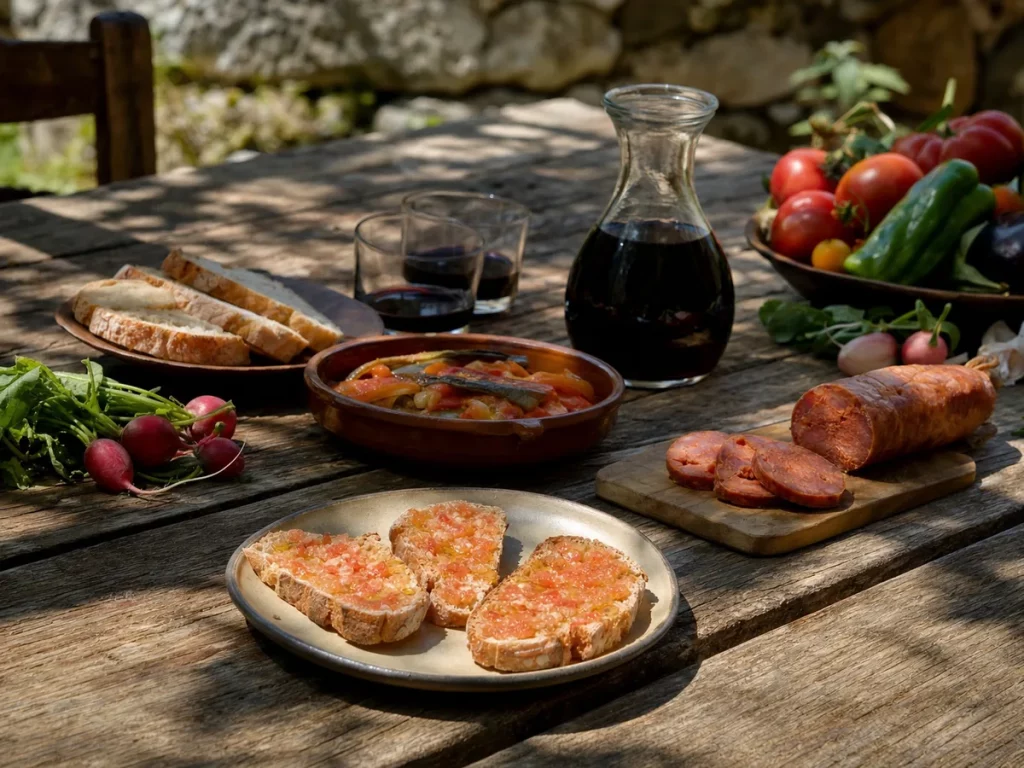
Typical Mallorcan dishes revolve around vegetables, pork, and olive oil. In 2026, the island will protect hallmarked jewels: the Sobrasada de Mallorca IGP exceeded 5.6 million pieces in 2025, the Oli de Mallorca DOP it encompasses over 4,300 hectares of olive groves, and within the Pla i Llevant Designation of Origin, in the Manacor region, 13 wineries operate. At Es Mayolet, we bring it from our own organic orchard to your table.
Some cuisines are better understood through hands-on experience than theory. Mallorcan cuisine is one of them. Typical Mallorcan dishes didn't originate in an elegant cookbook, but rather in the kitchens of the peasantry: using up the whole pig, preserving garden vegetables, stretching day-old bread. From this rural logic emerged a typical Mallorcan cuisine that is honest, flavorful, and surprisingly modern.
Here in Manacor, in the heart of Llevant, we continue to cook with that same philosophy. Olive oil reigns supreme, vine tomatoes hang until winter, and sobrasada is cured at its peak. This is a journey through the dishes that define Mallorcan cuisine: what they are, where they come from, and why they are worth trying, made with local produce rather than imitations.
What typical Mallorcan dishes are a must-try?
If you were to visit the island for just one time, these are the must-try dishes. They are dishes that tell the story of the land: garden produce, pork, almonds, and oven cooking. Some are eaten daily in every home; others only appear at festivals or slaughtering days. Together, they form the emotional map of Mallorcan cuisine.
- Tumbet: Layered fried vegetables —potato, eggplant, pepper— topped with tomato sauce.
- Mallorcan Frit: stir-fried offal or fish with potato, pepper and fennel.
- Sobrasada: raw cured pork and paprika sausage, unctuous and with its own PGI.
- Coca de trampó: thin dough without cheese topped with chopped tomato, pepper and onion.
- TrempóSummer salad of tomato, green pepper and onion, raw and fresh.
- Arròs brut: soupy and spiced rice with meat, game and seasonal vegetables.
- Mallorcan soups: dry vegetable stew on thin slices of country bread.
- Pa amb oli: bread with tomato spread, oil, salt and various accompaniments.
- Variat: assortment of homemade tapas served on a single plate for sharing.
- Porcella (lechona): Roast suckling pig, with crispy skin, a celebratory dish.
- Scaldums: turkey or chicken stew with almond sauce and potato.
- Ensaïmada: spiral of puff pastry dough with butter, plain or filled.
- Almond cat: moist almond sponge cake, without flour, with ice cream.
- Robiols and cocarrois: sweet or vegetable empanadas, typical of festivities.
What makes Mallorcan cuisine unique compared to the rest of Spain?
The difference is geographical rather than technical. Mallorca is an island, and an island cooks with what it has on hand and saves what's left over. That's why typical Mallorcan food revolves around preserves, bread, and pork, much more than imported recipes.
Paprika, for example, doesn't color cooked chorizo here, but rather raw sobrasada that matures on its own. Bread isn't thrown away: it's sliced very thinly and used to make sopes. And sweets don't depend on refined sugar, but on almonds, which have carpeted the fields of the Pla for centuries. Add to that the Arab heritage in pastry making and the importance of olive oil, and you understand why typical Mallorcan dishes taste different from those on the mainland. It's not folklore: it's the island's larder transformed into its identity.
From garden to table: what local product sustains Mallorcan cuisine?
All Mallorcan cuisine rests on four pillars of the land: seasonal vegetables, olive oil, pork, and wine. Without a vegetable garden, there's no tumbet or trempó. Without an olive grove, there's no pa amb oli. It's a gastronomy that begins in the land and ends, almost directly, on the plate.
The Oli de Mallorca DOP it brings together some 1,122 registered producers and more than 4,300 hectares of olive groves, and is the thread that binds together almost all of these dishes. The cluster tomato, which keeps for months while hanging, allows you to enjoy trempó out of season. This logic of local sourcing is what sustains Farm-to-table cuisine in Mallorca which we practice, and which is gaining ground in the island's haute cuisine: locally sourced produce, short season, and minimal handling. The less the ingredient travels, the more the flavor speaks for itself.
What are the Mallorcan spoon and rice dishes: sopes, arròs brut and frit?
Mallorcan winter is a dish best enjoyed with a spoon. Mallorcan sopes, Despite the name, they don't have loose broth: they're a dry stew of cabbage, cauliflower, and vegetables served on very thin slices of brown bread, which soak up all the juices. It's comforting and leaves no one hungry.
The arròs brut It's the other great stew recipe: a soupy, dark, and spiced rice dish with pepper, cloves, and sometimes cinnamon, loaded with meat, small game, sobrasada (a type of cured sausage), and vegetables. The Mallorcan fried completes the trio, though it takes a different approach: a robust stir-fry of liver, blood sausage, or fish with potato, pepper, and fresh fennel, closely linked to the pig slaughter and springtime. These are three hearty dishes, cooked slowly, that explain why Mallorcan cuisine is so deeply rooted in the traditional Mallorcan farmhouse. None of this is left to chance.
Which garden vegetables are the stars of Mallorcan cuisine: tumbet, trempó and coca de trampó?
Here, vegetables aren't a side dish: they're the star. The tumbet stacks separately fried potatoes, eggplant, and peppers, layer upon layer, and bind them together with a reduced tomato sauce. Served on its own, it's a complete dish; with an egg or fish on top, it's a summer feast.
The trempó it's is raw and fresh version: ripe tomato, green pepper, and onion, hand-cut, dressed with oil and salt, with no other embellishments. And when that same trempó is spread over a thin pastry and baked, the coca de trampóborns, that flatbread without cheese or fried tomato, eaten standing up, at any village festival in the Llevant region. Three recipes, one single origin: the seasonal garden. That's why, in summer, they change depending on what the land yields that day. It's the most vibrant part of Mallorca's traditional dishes.
What sausages and products with Protected Designation of Origin does Mallorca have?
Mallorca protects its larder with official seals, guaranteeing its origin. Sobrasada de Mallorca IGP It's the queen: a raw, cured pork sausage with paprika that can be spread, cooked, or eaten with a spoon. In 2025, it sold more than 5.6 million pieces, and small formats now account for the bulk of sales.
Beside him, the Oli de Mallorca DOP It provides the fat base for almost everything, with more than 4,300 hectares of olive groves. And then there's the wine: the DO Pla i Llevant, The designation of the Manacor region where we are located encompasses 444 hectares, 13 wineries and 67 winegrowers, producing red, white and rosé wines with great character, as reported on the official website of Wines and wineries of Pla i Llevant. If you want to delve deeper, here you go the best wines of Mallorca to accompany the meal. Which wine goes with each of these dishes is explained in our guide to wine pairing in Mallorca.
What are the typical desserts of Mallorca: ensaïmada, gató and robiols?
The Mallorcan sweet smells of almonds and butter. The Ensaïmada de Mallorca IGP it's the emblem: a spiral of thin, flaky pastry made with saïm—lard—with written references dating back to the 17th century. Plain for breakfast, filled with angel hair or cream for a celebration.
The gató is the quintessential after-dinner dessert: a flourless, ground almond sponge cake, moist inside, almost always served with almond ice cream to warm it up. And on special occasions, the robiols and cocarroisappear, these sweet pastry empanadas are filled with ricotta cheese, angel hair squash, or vegetables, depending on the season. They're slow-baked desserts, the kind that were traditionally made at home for Easter or village festivals. None of them need much sugar: the almonds from the Pla region do the trick.
Frequently asked questions about typical Mallorcan dishes
What is the most typical dish in Mallorca?
It's hard to choose just one, but the pa amb oli and the tumbet they vie for the title. Pa amb oli is the everyday staple: bread, tomato, oil, and salt. Tumbet, on the other hand, encapsulates the Mallorcan vegetable garden in a layered dish of fried vegetables. If you're looking for a sweet treat, the ensaïmada wins hands down. Among Mallorca's typical dishes, these three are the gateway.
What is pa amb oli and how do you eat it?
Pa amb oli is dark country bread rubbed with tomato spread, drizzled with Mallorcan olive oil, and sprinkled with a pinch of salt. It can be eaten as is or topped with whatever is available: sobrasada, Mahón cheese, ham, olives, or salted fish. There's no set recipe, and that's what makes it so special. It's the foundation of traditional Mallorcan cuisine and the best example of unpretentious, locally sourced cooking.
What typical desserts are there in Mallorca?
The Big Three are the ensaïmada, the "gató de almendra" with ice cream and the robiols and cocarrois . They all share two ingredients from the island: almonds from the Pla region and lard. The ensaïmada, protected by a Protected Geographical Indication (PGI), has written references dating back to the 17th century. They are oven-baked desserts, not very sweet, and closely linked to the Mallorcan festival calendar.
Where can I try typical Mallorcan dishes made with locally sourced products?
Ideally, you should look for restaurants that use local produce, where the vegetables come from the garden and the wine from nearby vineyards. In the Manacor region, within the Pla i Llevant DO, you'll find agritourism establishments and restaurants that cook seasonally. At Es Mayolet we serve Our tasting menu in Mallorca starting with your own organic garden. If you'd like some guidance beforehand, consult The complete guide to the gastronomy of Mallorca. You have a selection of restaurants in Manacor with produce-driven cooking, to start with the capital of the Llevant.
Where to try Mallorcan farm-to-table cuisine?
Traditional Mallorcan dishes taste best when the ingredients have traveled minimally. That's the philosophy behind Es Mayolet, here in Manacor: the menu is inspired by the estate's organic garden, and the wine comes from our own vines within the Pla i Llevant DO. No rush, no fuss, just the time that good cuisine needs. If you want to experience Mallorcan cuisine from its origins, we look forward to welcoming you to our agrotourism in Mallorca. Book a table, sit down without a watch, and let the garden dictate the menu. If you've never tried this format, we'll explain what a tasting menu is and how it is experienced on an estate.