
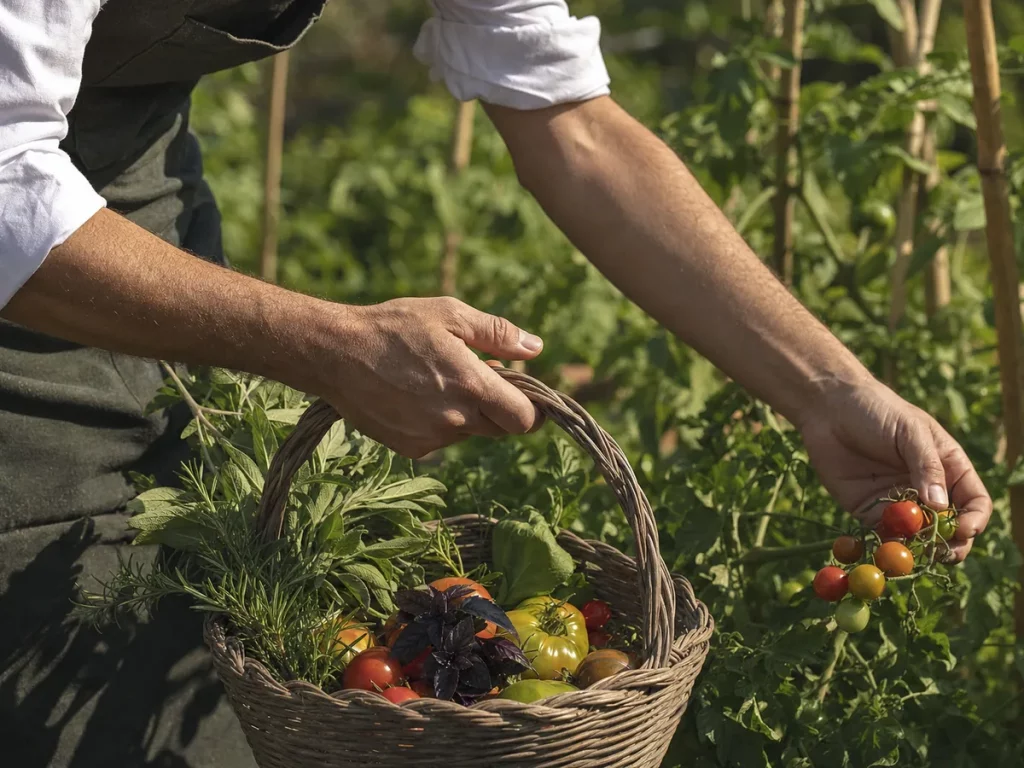
Farm-to-table (or km0) cuisine in Mallorca involves cooking with produce grown on the farm itself or a few kilometers away, harvested the same day, and served in season. This reduces transportation, guarantees maximum freshness, and connects the menu to the landscape. At Es Mayolet in Manacor, the organic garden supplies the kitchen run by chef Andreu Genestra (one Michelin star and one Green Star), who reinterprets Mallorcan tradition with produce picked just meters from the stoves.
There's a distance that changes the flavor of food: the distance a tomato travels from the moment it's picked until it reaches the plate. The shorter, the better. That's what farm-to-table cooking is all about.
It's not a fad. It's about going back to how we used to cook, when there was no other option than whatever produce was available. In this guide, I'll explain exactly what it is, why it matters, and what life is like in a rural hotel in Mallorca with its own vegetable garden.
What is farm-to-table cuisine?
Farm-to-table cuisine is a model in which ingredients are grown on or very near the farm, harvested shortly before cooking, and served according to the season. The product's journey is minimal—hence the names "km0" or "farm to table"—and this is reflected in the freshness and flavor.
The idea is both simple and radical: the menu is dictated by the garden, not the other way around. If artichokes are in season, then there are artichokes. If figs are in season, the dessert features figs. The menu breathes with the land.
This forces the cook to be more creative and more honest. He can't hide mediocre ingredients under sauces. He works with what the land provides that day, and he respects it.
How does km0 differ from conventional cooking?
The main difference between local and conventional cuisine is the origin and timing of the ingredients. In conventional cuisine, ingredients can travel hundreds of kilometers and spend days in cold storage; in local cuisine, they are grown nearby and used freshly harvested, at their peak.
- Distance. Meters or a few kilometers versus long transport chains.
- Freshness. Daily harvest versus stored product.
- Season. Menu that changes with the seasons versus a fixed offer all year round.
- Traceability. You know exactly where each ingredient comes from.
- Impact. Less transport and less carbon footprint associated with the dish.
What you gain isn't just ethical. It's about flavor. A seasonal product picked at its peak is unrivaled, and that's evident in every bite.
Why is Mallorca an ideal land for local cuisine?
Mallorca is the perfect setting for local cuisine because it boasts an extraordinary larder: inland vegetables, Mediterranean fish, olive oil, almonds, sobrasada, cheeses, and wines with designation of origin. Almost everything a good kitchen needs can be found on the island.
The climate is a plus. Mild winters and long summers allow for cultivation for much of the year, so the orchard yields produce in almost every season. The interior of the island—the Pla and the Llevant—is home to farms that have been working the land for generations.
Added to this is a strong culinary culture. Traditional Mallorcan cuisine was already locally sourced out of necessity; reviving it with a focus on local ingredients is almost like returning it to its rightful place. We developed it in our Mallorca gastronomy guide.
What seasonal products are grown in a Mallorcan vegetable garden?
A Mallorcan vegetable garden yields different produce each season, and this rotation is precisely what dictates the menu of a farm-to-table cuisine. Seasonality rules.
- Spring: broad beans, peas, artichokes, chard, first lettuces and aromatic herbs.
- Summer: Ramellet tomatoes, peppers, zucchini, eggplant, melon and figs.
- Autumn: pumpkin, mushrooms, pomegranate, harvest grapes and the first cabbages.
- Winter: citrus fruits, broccoli, late artichoke, leafy vegetables and hardy herbs.
To this are added free-range eggs, honey, herbs for infusions, and, on estates with vineyards, the grapes themselves. Each season rewrites the menu.
What's it like to eat at a farm with its own vegetable garden in Mallorca?
Dining at a farm with its own vegetable garden in Mallorca is a complete sensory experience: the produce comes straight from the field in front of you, the menu changes with the seasons, and the meal unfolds at a leisurely pace, usually outdoors or in front of the kitchen. It's not just about eating; it's about understanding where your food comes from.
At Es Mayolet, the estate's organic garden directly supplies the kitchen. The concept is overseen by Mallorcan chef Andreu Genestra, recognized with a Michelin star and a green star for his sustainable practices, according to the Michelin Guide. Their cuisine reinterprets the island's traditions using produce gathered just a few meters from the stoves.
The format is that of a tasting menu that breathes with the countryside. You can see what life is like at our gastronomic proposal and in the tasting menu in Mallorca. In many cases, the wine comes from the vineyard of the estate itself: soil and glass, once again, from the same place.
What are the benefits of local cuisine for the diner and the environment?
Locally sourced cuisine benefits diners with fresher, tastier, and seasonal produce, and the environment with less transportation, support for local producers, and preservation of the agricultural landscape. It's one of those rare things where everyone wins.
For the consumer, the difference lies in the food itself: real flavor, seasonality, and the peace of mind of knowing what they're eating. For the region, maintaining thriving gardens means caring for the rural landscape and preventing the countryside from being abandoned. Public initiatives like those promoted by the Department of Tourism and Work of the Balearic Islands they point in that direction: a tourism that values the local and the sustainable.
Eating locally, in the end, is a quiet way of taking care of the island.
Frequently asked questions about farm-to-table cuisine in Mallorca
What exactly does farm-to-table cuisine mean?
Farm-to-table cuisine means cooking with produce grown on or near the farm, harvested shortly before serving, and used according to the season. The ingredient's journey from the field to the plate is minimal. This is why it's also known as km0 or farm-to-table cuisine. The menu adapts to what the garden yields at any given time of year, rather than imposing a fixed menu.
Is local cuisine the same as organic cuisine?
They're not exactly the same, although they often go together. "Kilometer zero" cuisine refers to the proximity of the product, while "organic" refers to cultivation methods that avoid pesticides and chemical fertilizers. A farm can be "km0" without being organic, and vice versa. Ideally, they should coincide: locally sourced and organically grown, as in a home garden managed sustainably.
Does the menu change seasonally at a local restaurant?
Yes, in a farm-to-table restaurant, the menu changes with the seasons because it depends on what the garden produces at any given time. In spring, broad beans, artichokes, and peas predominate; in summer, tomatoes, peppers, and figs; in autumn, pumpkin and mushrooms. This rotation is one of the charms of the model: each visit in a different season offers different dishes.
Where can you experience farm-to-table cuisine in Manacor?
In Manacor, you can experience farm-to-table cuisine at farms and agritourism establishments that cultivate their own gardens and create menus using their produce. This is the case at Es Mayolet, where the organic garden supplies the kitchen run by chef Andreu Genestra. Diners enjoy a seasonal menu right on the farm, with the fields where the produce comes from visible view.
From the garden to your table, in the heart of Mallorca
The best way to understand farm-to-table cuisine is to sit down and eat it. See the garden, smell the countryside, and taste what the land has yielded that day, cooked with respect and skill.
If you feel like experiencing it, Write to us and book. We'll tell you about our seasonal menu. agrotourism in Mallorca And what is it like to eat slowly, with the vegetable garden just a step away from the table?.