
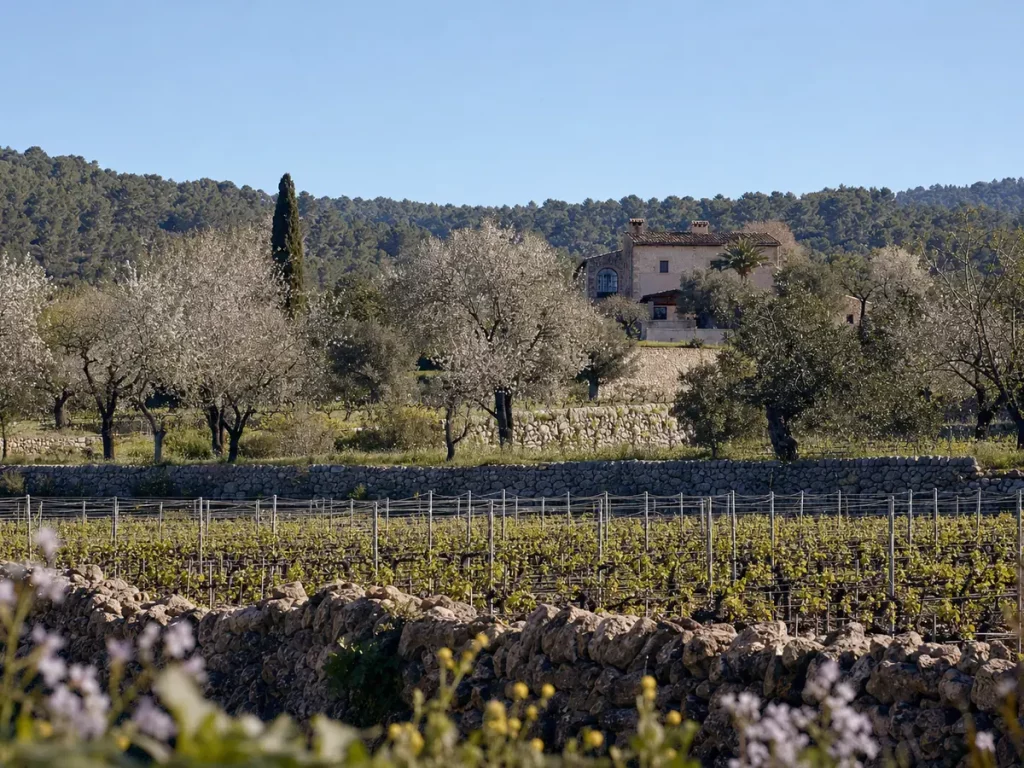
Mallorca broke records in 2025 with 19.05 million tourists, and the peak season (July 15–August 31) is characterized by heat, high prices, and crowds. But that's not the best time to visit Mallorca. May, June, September, and October offer pleasant weather, warm seas, and much more tranquility. And inland, spring and autumn are the true gems: green countryside, the grape harvest, and peace and quiet away from the coast.
Choosing the best time to visit Mallorca depends less on the calendar and more on what you're looking for. The island isn't just one place. The coast is buzzing in August, while the interior hides its best side during the shoulder months, those that almost no one visits. Here in Manacor, in the heart of Llevant, the landscape transforms with each season. The almond trees blossom in February. The vegetable gardens burst into color in spring. The vineyards are harvested at the end of summer, and the October light gilds everything. This guide explores Mallorca month by month, with real data on weather and visitor numbers, so you can choose the right dates. And here's a simple tip: if you're looking for peace and quiet, green countryside, and plenty of space, the answer is almost never July.
What is the best time to visit Mallorca depending on what you are looking for?
There's no single answer, and that's the secret. If you're looking for beaches and a lively atmosphere, aim for June through September. If you're seeking nature, hiking, and tranquility, choose spring and autumn. And if your priority is escaping the crowds, avoid July 15th through August 31st.
The coast and the interior offer different experiences. In summer, the former teems with people, while the latter becomes a haven. A swim in August is wonderful at nine in the morning and oppressive at midday. In contrast, a stroll among almond trees in March, with the countryside still fresh, is unparalleled.
Think of it this way: those who come to Mallorca just for the sand have a window of opportunity. Those who come for the whole island have almost the entire year. That's why a a getaway to an agritourism farm in the interior of Mallorca it works on dates that the beach doesn't. Ultimately, the best time to visit Mallorca is the one that fits your plans, not the picture-postcard view.
What is the weather like in Mallorca month by month?
Mallorca's climate is textbook Mediterranean: hot, dry summers, mild winters, and rainfall concentrated in autumn and winter. Palma's average annual rainfall is around 449 mm, according to climate values for Palma (AEMET), far from the stereotype of a perpetually rainy island. Here's a glimpse of it.
| Month | Max-min temp. (ºC) | Sea temperature (°C) | Atmosphere |
|---|---|---|---|
| January | 15 / 5 | 14 | Quiet island, low light, cold sea |
| February | 15 / 5 | 14 | Almond tree in bloom, field awakening |
| March | 17 / 7 | 15 | Early spring, deep green |
| April | 19 / 9 | 16 | Pleasant days, garden in progress |
| May | 23 / 12 | 18 | Ideal weather, still few people |
| June | 27 / 16 | 21 | Comfortable beach, up-and-coming atmosphere |
| July | 30 / 19 | 25 | Dry heat, island at full capacity |
| August | 30 / 19 | 26 | The hottest and most crowded month |
| September | 27 / 17 | 25 | Warm sea, harvest, it empties |
| October | 23 / 14 | 22 | Golden light, soft autumn |
| November | 19 / 9 | 19 | Rainiest month, total calm |
| December | 16 / 7 | 16 | Mild winter, intimate island |
Look at the water column. The water takes time to warm up and also to cool down, which is why October is better for swimming than June. And observe the maximum temperatures: the difference between May and August is seven degrees, which is very noticeable at street level and under the sun.
What does Mallorca offer in spring (March-May): almond trees, orchards in bloom and green countryside?
Spring is, for many, the best time to visit Mallorca without going to the beach. March and April bring days with temperatures between 17 and 19 degrees Celsius, green countryside, and clear light. May sees temperatures rise to 23 degrees, with the sea temperature reaching 18 degrees. Fewer crowds, reasonable prices, and nature at its most abundant.
Inside, this season is a quiet spectacle. The almond trees finish blooming at the beginning of the year, but the vegetable garden takes over: broad beans, peas, the first seasonal vegetables. The countryside smells of damp earth and orange blossom when it's in season.
It's the perfect time for leisurely hikes, for exploring the Llevant region, for enjoying lunch outdoors without a coat or parasol. A weekend in May among vineyards and tranquility is nothing like the same place in August. Spring offers space, and space, here, is a luxury.
What to expect from Mallorca in summer (June-August): beach, heat and the interior as a refuge?
Summer is the picture-postcard Mallorca, and also its most uncomfortable. July and August see highs near 30 degrees Celsius, with a delightful sea temperature of 25-26 degrees. It's peak season: only in July 2025 did the island exceed the two million tourists, with the coves full from early morning.
June is the most pleasant of the three months. The crowds of mid-July haven't arrived yet, and the water is already inviting. If your only plan is to go to the beach, this is your month.
July and August demand strategy. The coast is best enjoyed at dawn or dusk, never at midday. And that's where the interior changes the rules: under a carob tree, with the pool nearby and no noise, the heat is dealt with in a different way. Many discover the coves of Llevant in the morning they end up sleeping far from the hustle and bustle, in the countryside, precisely to escape it. Another way to experience summer without stress is a day pass in Mallorca: pool, lunch and shade on an inland estate, without staying overnight.
Why is autumn (September-October) ideal in Mallorca: grape harvest, warm sea and golden light?
Autumn is probably the best time to visit Mallorca if you want it all. September boasts highs of 27 degrees Celsius and a warm sea at 25. October's temperatures drop to 23, with the water still at 22, perfectly swimmable. And suddenly, the island empties out. Prices fall, the coves breathe, and the heat becomes gentler.
There's more to it than just the weather. September is the month of the grape harvest, which here begins at the end of summer and, in warm years, can start as early as mid-August. The vineyards fill with people picking grapes, the must perfumes the air, and the countryside enters its most sensory form. It's the season for wine tourism in Mallorca: winery visits, tastings and the vineyard in full activity.
The October light deserves its own chapter: low, golden, long. It falls on the weary vineyards and the dirt roads with a warmth that no camera can fully capture. Discover Mallorca in autumn it's about understanding why those who know the island choose these months and keep it a secret.
What is Mallorca like in winter (November-February): a quiet island with almond trees in bloom?
Winter in Mallorca is mild and quiet. Highs range between 15 and 19 degrees Celsius, with cool nights and a cold sea, around 14 degrees. It's not swimming season, but rather a time for intimate island life: villages without queues, restaurants with plenty of seating, and paths all to yourself.
November is the rainiest month, with around 55 mm of rainfall, so there's a chance of a few overcast days. On the other hand, the countryside is magnificent and the light is crystal clear.
And then comes winter's greatest gift: in late January and February, the almond trees blossom, painting the landscape white and pink. It's one of Mallorca's most beloved sights, and it happens just when hardly anyone is visiting. For those seeking peace, photography, and nature untouched by tourism, winter holds its own special magic.
What is the best time to explore the interior of Mallorca and enjoy agritourism?
For inland areas and agritourism, the optimal window runs from April to October, with four peak months: May, June, September, and October. These months offer pleasant weather, long days, swimming in the sea, and, above all, far fewer crowds than the height of summer. This is when the countryside, orchards, and vineyards are at their best.
The agritourism season coincides, not by chance, with that time of year. In spring, the blossoming orchards and lush greenery reign supreme; in autumn, the grape harvest and golden light take center stage. July and August are also good options if you're looking for a pool and peace and quiet at midday, but you'll pay the price for peak season and crowds.
Our recommendation is simple: if you have a choice, come during shoulder season Luxury agritourism in the Llevant region of Mallorca it shines precisely when the coast presses in and the interior breathes. That is where time, silence, and space cease to be mere words and become the reason for the journey.
When can we avoid overtourism in Mallorca?
The golden rule: avoid July 15th to August 31st. It's peak season, when the island is packed, the roads are congested, and accommodation prices can skyrocket. The Balearic Islands reached a record high in 2025 19.05 million tourists, a +1,73% compared to the previous year, and a good part of it is concentrated in that month and a half.
The alternative isn't to give up on summer, but to postpone it a little. The first half of July is already quieter. June and September offer almost identical weather with half the crowds. And October is a gift: gentle heat, warm seas, and nearly empty coves.
It also helps to sleep away from the coast. Whoever books a A getaway to disconnect in Mallorca inland, visit the beaches in the morning and return to the tranquility of the countryside. This way you can enjoy the best of the island without experiencing its noisier side.
Frequently asked questions about when to travel to Mallorca
What is the best month to go to Mallorca?
If we had to choose just one month, it would be May or September. Both offer pleasant highs of 23 to 27 degrees Celsius, swimming water, and far fewer crowds than in the height of summer. May kicks off the season with the countryside in bloom; September closes it with the grape harvest and still-warm water. The best month to visit Mallorca is, in reality, either of those two shoulder months.
In which months can you swim in the sea in Mallorca?
Comfortable swimming is best from June to October, when the sea temperature ranges between 21 and 26 degrees Celsius. July and August offer the warmest water (25-26°C), but September and October are also pleasant (25-22°C) and offer much calmer coves. Outside of this period, the water cools down quickly: in winter it hovers around 14 degrees Celsius, suitable only for the bravest.
Which is the hottest and rainiest month in Mallorca?
The hottest month is August, with average highs around 30 degrees Celsius and warm nights. November is the rainiest, with about 55 mm of rainfall, as most of the rain falls in autumn and winter. July is the driest. Overall, Palma receives an average of just 449 mm of rainfall per year, according to data from AEMET, a climate much drier than many imagine.
Is it worth going to Mallorca in spring or autumn?
Absolutely, and for the interior, they're simply the best time to visit Mallorca. Spring brings green fields, blossoming orchards, and pleasant days without the crowds. Autumn adds the grape harvest, a still-warm sea, and that golden light so typical of October. In both cases, you'll enjoy good weather, lower prices, and tranquility. If your plan is nature, gastronomy, and getting away from it all, they're far superior to summer.
When to book your getaway to the interior of Mallorca?
The short answer: when the island breathes. May, June, September, and October offer the best of Mallorca away from the crowds, and these are the times when a rural getaway in the Llevant region can truly be enjoyed. If you're looking for almond blossoms, save February. If you dream of the grape harvest, mark September. Whichever time you choose, here luxury doesn't change with the seasons: it remains the time, the silence, and the space. Write to us, and together we'll find the perfect dates for you.