
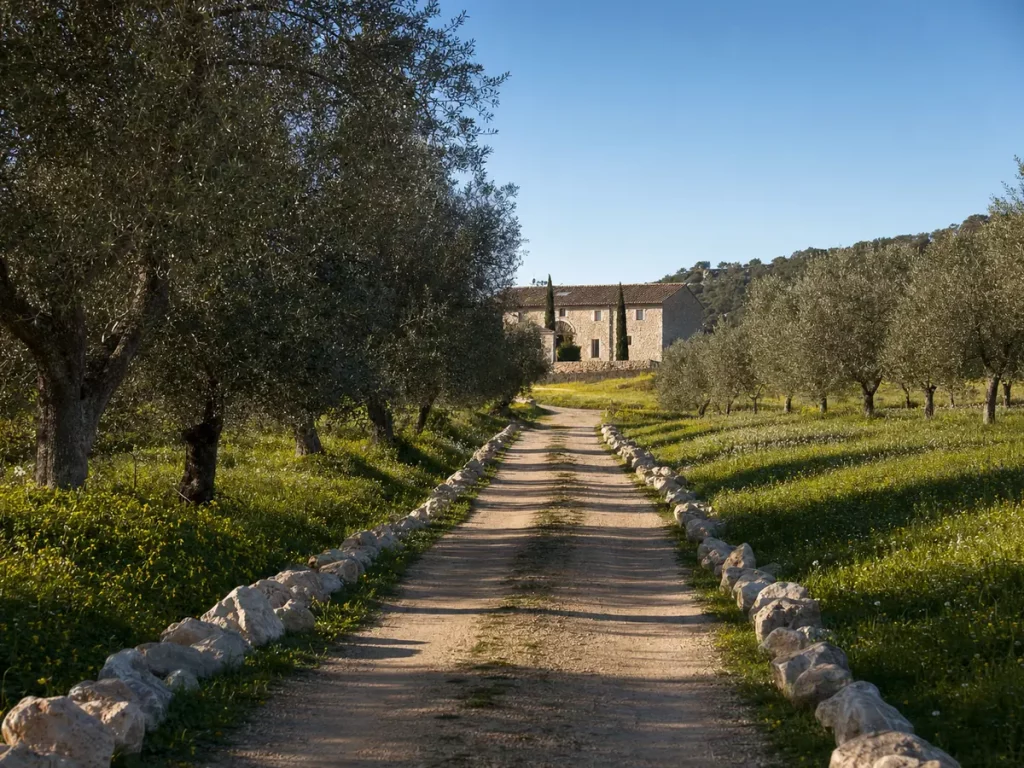
Sustainable tourism in Mallorca seeks to enjoy the island while reducing environmental and social impact: travel off-season, choosing small, responsible accommodations, consuming local products, and respecting the natural environment are key. This is a response to mass tourism, which in 2025 brought a record of over 19 million visitors to the Balearic Islands. Agritourism—rural farms with organic gardens and low occupancy—is one of its most coherent forms, and Es Mayolet, in Manacor, embodies this concept in the realm of slow travel.
Mallorca receives a huge number of visitors every year. In 2025, the Balearic Islands surpassed 19 million tourists, a historic record. And yet, there is another Mallorca possible: one that is visited slowly, quietly, leaving the smallest trace. That is precisely the idea behind a getaway to disconnect inland, far from the crowded coast.
That's what sustainable tourism is all about. Not giving up on travel, but doing it better. In this guide, I explain what it is, how to travel responsibly around the island, and why a agrotourism in Mallorca it's one of the most honest ways to do it.
What is sustainable tourism and why does it matter in Mallorca?
Sustainable tourism is tourism that meets the needs of travelers without compromising the environment, the local economy, or the quality of life of residents. This is especially important in Mallorca because it is an island with limited resources—water, land, coastline—subjected to enormous tourist pressure.
The numbers explain the urgency. In 2025, the Balearic Islands reached a record of 19,053,592 tourists, according to the official statistics from the Balearic Government. Mallorca is the island that accounts for the largest share of that volume. That figure brings wealth, yes, but it also puts pressure on water resources, transportation, and the landscape.
Sustainable tourism doesn't ask us to stop coming. It asks us to come in a different way: spread throughout the year, integrated into the local area, and respectful of those who live here year-round.
How to travel sustainably in Mallorca?
Traveling sustainably in Mallorca is easier than it seems, and it starts with a few conscious decisions before and during your trip. You don't have to give up anything; you just have to choose better.
- Travel outside of peak season. May, June, September and October offer good weather with less saturation.
- Choose small and responsible accommodations, such as agritourism or farms, as opposed to large complexes.
- Buy local: markets, wine with designation of origin, local restaurants.
- Move with your headShare a car, use a bike on the greenways, or walk.
- Respect natural spaces: marked trails, do not leave any waste, take care of the coves.
- Support producers and artisans from the island instead of imported souvenirs.
Each of these decisions is small. Together, they completely change the impact of a trip.
What is slow travel and how is it applied on the island?
Slow travel is a travel philosophy that prioritizes the quality of the experience over the quantity of places visited: spending more days in fewer places, getting to know the destination thoroughly, and experiencing it at a leisurely pace. It fits perfectly in Mallorca, because the island rewards those who take their time.
Instead of visiting twelve coves in a day, slow travel proposes truly experiencing one. Instead of ticking monuments off a list, it suggests a long after-dinner conversation, a leisurely stroll, a chat with the winemaker. Luxury ceases to be about doing a lot and becomes about having time.
This way of traveling connects naturally with the island's interior, far from the more crowded coast. It's the Mallorca of charming villages, which we explore in This guide to the island beyond the beach.
Why is agritourism a responsible tourism option?
Agritourism is one of the most consistent forms of responsible tourism because it combines low occupancy, integration into the rural landscape, and direct support for agricultural activity. Compared to a large coastal hotel, a farm with a few rooms puts less pressure on the land and keeps the countryside alive.
A good agritourism establishment doesn't just provide accommodation: it cultivates. It has a vegetable garden, sometimes a vineyard, encourages the recovery of native varieties, and preserves traditional architecture instead of building from scratch. This means that the traveler's money stays on the island and sustains a landscape that would otherwise be abandoned.
Furthermore, scale matters. Ten rooms are not four hundred. The impact on water, waste, and the environment is radically smaller, and the experience, for the traveler, is infinitely more authentic.
The slow luxury philosophy of Es Mayolet
At Es Mayolet, sustainability isn't just a slogan on the wall: it's how they operate. The 28-hectare estate in the heart of rural Mallorca embraces a slow luxury model where luxury is measured in time, silence, and space, not in meters of marble.
Just ten rooms. An organic garden that supplies the kitchen. Its own vineyard. Native wildlife and restored Mallorcan architecture instead of new construction. And a kitchen run by chef Andreu Genestra—one Michelin star and one Michelin Green Star, the latter a specific recognition of sustainable gastronomy, according to the Michelin Guide— that works with local and seasonal products.
All of this makes up a Luxury and sustainable agritourism designed for those who want to enjoy Mallorca without feeling guilty. You can see the experiences at the estate at This page.
Frequently asked questions about sustainable tourism in Mallorca
What is considered sustainable tourism in Mallorca?
Sustainable tourism in Mallorca is defined as tourism that reduces the environmental and social impact of travel: choosing small, responsible accommodations, traveling outside of peak season, consuming local products, traveling efficiently, and respecting natural spaces. The goal is to enjoy the island without harming its resources—water, soil, coastline—or the quality of life of those who live here year-round.
What is the best time for a sustainable trip to Mallorca?
The best time for a sustainable trip to Mallorca is during the shoulder season: May, June, September, and October. The weather remains excellent, but tourist pressure is lower than in July and August, reducing the strain on water resources, roads, and natural areas. Traveling during these months also allows for a more peaceful experience and a more authentic connection with the island and its people.
Is agritourism more sustainable than a large hotel?
In general, yes. Agritourism is usually more sustainable than a large hotel because it has a much smaller capacity, blends into the existing rural landscape, and often grows some of its own food in its own garden. This translates into lower water and energy consumption per stay, less waste, and direct support for the local agricultural economy. The smaller scale is, in itself, an environmental advantage.
How can I reduce my footprint during a holiday in Mallorca?
You can reduce your footprint in Mallorca by choosing responsible accommodation, traveling outside of peak season, consuming local, seasonal produce, carpooling or avoiding the car whenever possible, and respecting trails and coves. Supporting local producers, wineries, and artisans also keeps the local economy alive. These are simple gestures that, when combined, completely change the impact of a trip.
Discover the Mallorca that you can travel at a slower pace.
There's a way to experience Mallorca that leaves no trace, only memories. It's about staying on a farm, eating what the garden produces, strolling among the vineyards, and letting the days unfold at their own pace.
If you want to travel like this, Write to us and book your stay. In Es Mayolet, the authentic island awaits you, the sustainable one, the one where life is lived at a calm pace.