
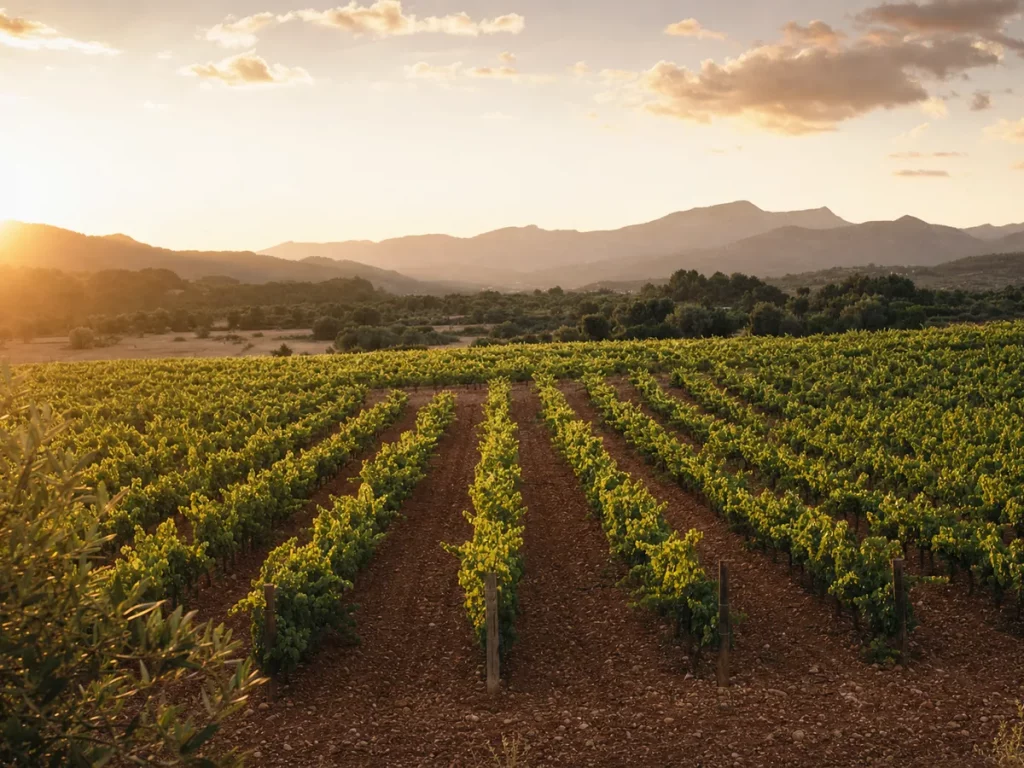
Wine tourism in Mallorca revolves around two designations of origin: Binissalem (established in 1990) and Pla i Llevant (established in 1999, encompassing 18 municipalities and approximately 440 hectares of vineyards). The Manacor area belongs to the Pla i Llevant DO, home to native grape varieties such as Callet, Manto Negro, and Prensal Blanc. Tastings and tours typically require reservations during peak season (April-October). At Es Mayolet, wine is experienced firsthand: the estate boasts its own vineyard in the heart of the island's rural landscape. This same vineyard provides the ideal setting for a honeymoon among vineyards for newlyweds.
Wine tourism in Mallorca has gone from being a rarity to becoming one of the most beautiful ways to experience the island. Not the island of crowded beaches. The other one. The island of the interior, the dirt roads, and the vines that have clung to the limestone for centuries.
If you love wine and want to discover the Mallorca that's best savored slowly, this guide will be your map. I'll explain how the designations of origin work, what grapes you'll find, when it's best to visit, and how all of this fits in with a stay in a Luxury agritourism in Mallorca with its own vineyard.
What is wine tourism and why is Mallorca an ideal destination?
Wine tourism is tourism centered around wine: visiting wineries, tasting wines, strolling through vineyards, and learning firsthand how each bottle is made. In Mallorca, it has an added appeal because it combines a Mediterranean landscape, native grape varieties found nowhere else, and a human scale: here, the wineries are small, and you're often served by the winemaker himself.
The island has been producing wine since Roman times. What has changed in the last two decades is the quality. Local producers stopped competing on quantity and started focusing on something more interesting: reviving old grape varieties, working organically, and telling a story. That's the story you've come to drink.
What designations of origin does Mallorcan wine have?
Mallorca has two official designations of origin: DO Binissalem and DO Pla i Llevant. Each one has its own character, its own area, and its own signature grapes.
- DO Binissalem. The oldest, recognized in 1990. It is concentrated in the center of the island, around Binissalem, Santa María and Consell. Its star red grape is Manto Negro.
- DO Pla i Llevant. Created in 1999, it encompasses 18 municipalities in the center and east of the island—Manacor among them—with approximately 440 hectares of vineyards. It is the designation under which much of the wine tourism in the Llevant region operates.
You can find details of the registered areas and wineries on the official tourism website of Balearic Islands Travel, which maintains an up-to-date map of wine routes.
And here's the key for those staying in Manacor: you're right within the Pla i Llevant DO. You don't have to cross the island for wine tourism. It's right on your doorstep. We detail the formats, prices, and times for each visit in the guide. wine tasting in Mallorca.
What native grapes are grown in Mallorca?
Mallorca's native grapes are the reason the trip is worthwhile. Among the red varieties, Manto Negro, Callet, and Fogoneu stand out; among the white varieties, Prensal Blanc (also called Moll) and Giró Ros. These are varieties that are hardly cultivated outside the Balearic Islands.
Callet produces smooth, fresh wines, very typical of the Llevant region. Manto Negro adds body and fruity notes. Prensal Blanc is the base for lively, citrusy white wines, perfect for the local fish. If you'd like to learn more about which bottles to look for, we cover this in our guide on the best wines of Mallorca.
The beauty of tasting these grapes in their natural habitat is that you truly understand the landscape. The wine tastes like what you see outside your window.
What is a visit to a winery in Mallorca like?
A typical visit to a winery in Mallorca lasts between an hour and a half and two hours, and includes a walk through the vineyard, an explanation of the winemaking process, and a tasting of three to five wines, often accompanied by local products. Most are intimate experiences in small groups.
Don't expect industrial warehouses or crowds. The charm of wine tourism here lies in the opposite: family-run wineries where the pace is slow and conversation is as important as the wine. In many, the tasting takes place outdoors, overlooking the vines.
- Book in advance, especially from April to October.
- Arrive early: the walk through the vineyard is part of the experience.
- Ask about the native grapes, they are what makes Mallorca different.
- If you're driving, spit in the tasting or designate a driver.
- Combine the visit with a local meal to round off the day.
When is the best time to go wine tourism in Mallorca?
The best time for wine tourism in Mallorca is from April to October, when wineries offer tours and the vineyards are either green or in full ripeness. September has a special charm: it's the grape harvest, and some estates allow visitors to participate in the picking.
Summer works beautifully for sunset tastings, when the heat subsides and the light turns golden over the vines. Spring, on the other hand, offers vineyards bursting into bud and fewer people. Any time of year is good; it just depends on whether you're looking for the hustle and bustle of the harvest or the tranquility of May.
Es Mayolet's own vineyard: wine tourism without leaving home
At Es Mayolet, wine isn't an excursion; it's part of the experience. The 28-hectare estate, nestled in the heart of rural Mallorca, boasts its own vineyard. This means you can stroll among the vines in the morning and, in the evening, find that same landscape reflected in the glass of wine accompanying your dinner.
The wine experiences are integrated with the rest of the estate's offerings—the organic garden, the walks, the locally sourced cuisine—into a very specific concept of luxury: time and silence. You can see the whole experience at our experiences on the farm.
The kitchen, led by Mallorcan chef Andreu Genestra —one Michelin star and one green star for his sustainable work, recognized in the Michelin Guide—, turns the pairing into a conversation between the wine from Llevant and the seasonal product.
Frequently asked questions about wine tourism in Mallorca
What designation of origin does Manacor wine have?
Manacor belongs to the DO Pla i Llevant, the designation of origin, created in 1999, encompasses the municipalities of central and eastern Mallorca. Wines made with indigenous grapes such as Callet and Manto Negro are produced under this designation. It is one of the island's two DOs, along with the Binissalem DO, located further west.
Do you need to book in advance to visit a winery in Mallorca?
Yes, in most cases you need to book a visit to a winery in Mallorca, especially between April and October, which is peak season. Wineries usually work with small groups to maintain the intimate nature of the experience, so it's best to write or call a few days in advance, especially if you want a guided tasting or a wine-paired meal.
Which Mallorcan wines are worth trying at a tasting?
On a wine tasting in Mallorca, it's advisable to try at least one red wine made from Manto Negro or Callet grapes, a white wine made from Prensal Blanc, and, if the winery offers it, a local rosé. This way, you'll experience all three grape varieties and understand the island's diverse range. Wines from Pla i Llevant tend to be fresh and fruity; those from Binissalem, somewhat more structured. Ideally, you should let the winemaker guide you.
Is it possible to do wine tourism in Mallorca as a family or as a couple?
Yes, wine tourism in Mallorca is perfect for both couples and families. For a couple, a sunset tasting is a romantic experience that's hard to beat. For a family, many estates combine the vineyard with a vegetable garden, animals, and walks, so while the adults taste the wines, the children discover rural life. Staying at an estate with its own vineyard allows you to enjoy it at a relaxed pace and without having to travel far.
Experience wine tourism in Mallorca from the inside out.
The best wine tourism isn't about visiting, it's about experiencing. Waking up among vineyards, strolling through the estate, and ending the day with a glass of Llevant while enjoying Andreu Genestra's cuisine is another way to discover Mallorca: slower, more authentic, more personal.
If you want to experience it like that, Write to us and book your stay. We'll tell you what a season at Es Mayolet is like and how to fit wine, the vegetable garden, and silence into your days.